Many thanks to Richard at
Grey Area for mentioning the show of work by the art students at Hastings Art College. I went yesterday and it was one of the best things I've seen for a long time.
It was really refreshing to see the work of people who hadn't become part of the system and while some pieces were quite derivative of artists like Grayson Perry, Tracy Emin and the Chapman brothers (who are Hastings alumni), there were others that had a very strong voice of their own.
But derivative or not, nothing I saw was boring.
I almost didn't go. My wife was given a new book to proof-read and needed a clear weekend to meet the deadline. I was on child duty. Was it really worth going if I had to drag two very reluctant boys with me?
In the end, my oldest son wasn't well enough to go and quarantined himself in cyberspace. I decided to take a chance with my younger son, hoping that he'd be have a slightly less jaded attitude towards anything that smacked of culture. To my surprise and delight, he loved the show. He was captivated by the sculptures and installations, laughed at the deliberately absurd pieces and described some works as "beautiful".
At four years old, my son had no idea what "art" was and treated the exhibition as a thing of entertainment and wonder. Having him with me actually enhanced the experience.
Here's a selection of the range of exhibits on display:
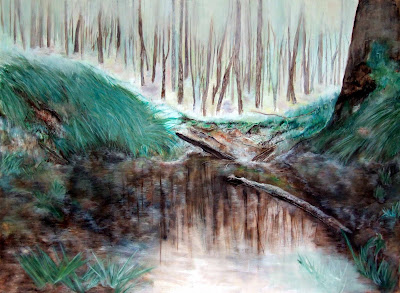
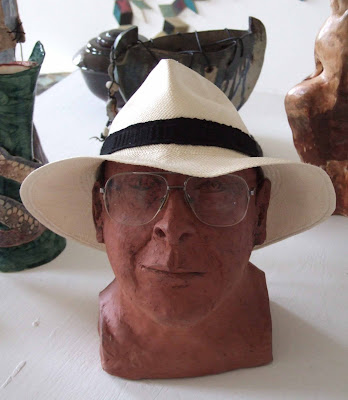
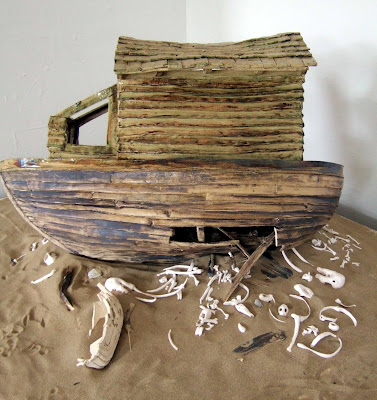
For some reason, this was my son's favourite, although he was also very taken with the exhibits in this room:
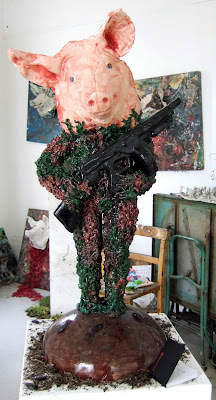
Later, during some fish and chips on the seafront, my son went into a reverie. I asked him what he was thinking and he replied "I'm imagining what fun I would have if I was at the place where they make things."


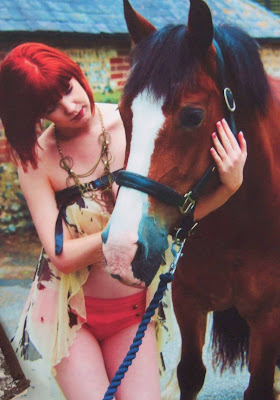
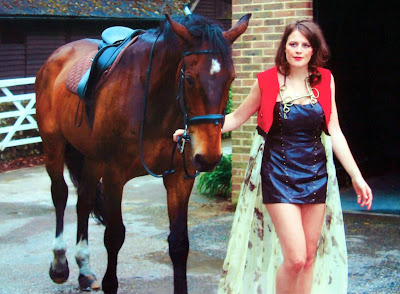
I've always liked the more traditional equestrian clothing, but I think I could get used to these.

These are five separate frames, with a depth of more than ten feet between the first and the last. As you can see, viewed from the front they form a whole.

This is one of a series of cheeky illustrations that use quotations from Shakespeare.
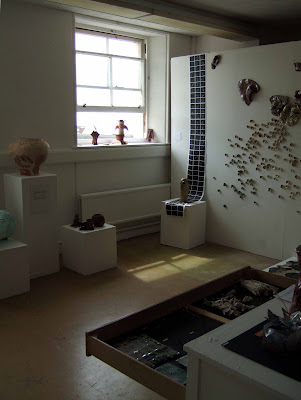
I really liked the way the work was exhibited and loved the building, which has beautiful sea views like this:

The college will shortly be moving to a new purpose built building, so this was my first and last visit to the Archery Road campus.
Finally, I came to the display of work by Richard's Graphic Communications students:

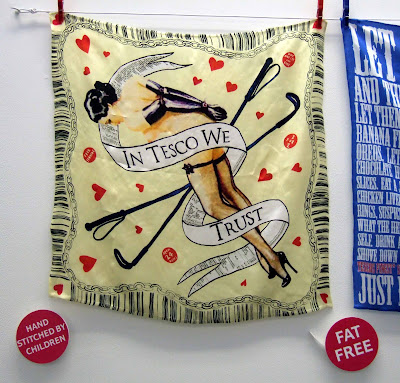
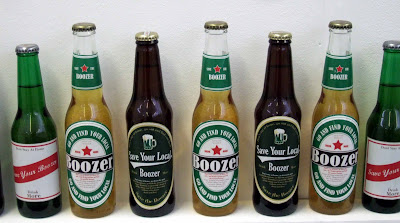
I loved this and really want to get hold of one - I'm going to make enquiries. Being a true hypocrite, I went shopping at Tesco this afternoon. I feel dirty now, and not in a good way either.
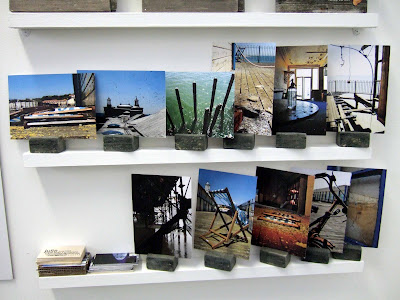
Eat your heart out, John Hinde. These postcards are better than anything you'll see on sale at the gift shops and tourist information centres.
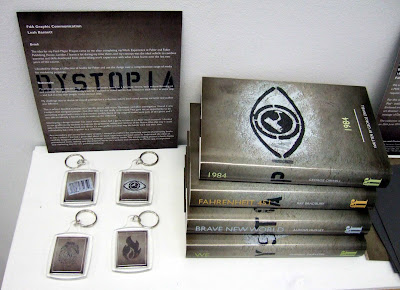
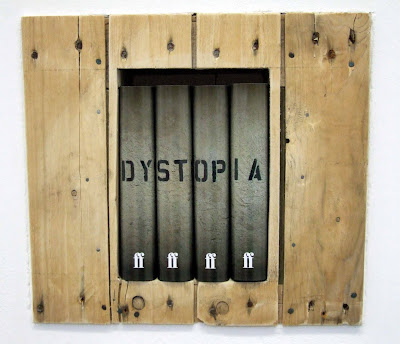
I was very impressed with these jacket designs for four dystopian classics. I trust that they would get the thumbs-up from James, at
Caustic Cover Critic.

Without the cultural baggage and self-importance of the "art world", this exhibition was fresh, funny and fearless. It did everything that art should do, but so often fails to once it has become labeled and commodified. That doesn't mean that everything in it was brilliant, but even in the less impressive works - the sub-Tracy Emin canvases or the imitation Grayson Perrys - there was still an authentic voice.
It's a great pity that this exhibition lasts for only a few days before disappearing into the ether. What will happen to these students? How many of them will be able to make a living from their talents, particularly in our new austere financial climate? With funding for the arts under a greater threat than ever, the outlook seems bleak.
But art always seems to thrive during difficult times, when people need it more than ever. So perhaps, after the rather depressing era of Brit Art and silly money, we are about to enter a golden age.
 Two months ago I wrote this post about the recent Paul Nash exhibition. It had rave reviews (the exhibition, not my blog post, sadly) in the press. The general feeling was that at long last, Nash was receiving the recogition he deserved as one of the most significant British artists of the inter-war years.
 Stupidly, I hadn't noticed it when I was sorting through the books that had just arrived. It was only later, when someone said that they'd found a letter by someone called Paul Nash, that I realised what we had found.


