Tuesday, October 10, 2006

Crime and Punishment

It is a mild October morning and at first glance I could be on a university campus. Set amongst carefully landscaped gardens, there are several lowrise redbrick halls, each one named after named after a species of British bird. However, I am surrounded by high fences topped with barbed wire and have to be accompanied by a prison guard. Welcome to Feltham Young Offenders Institute.

If you are between the ages of 15-21, live in Greater London and are charged with committing a serious crime, the likelihood is that you'll end up here. Each year 30,000 young men pass through Feltham's gates, although there are only 600 at any one time. I am visiting because I do some voluntary work in my spare time and have to visit two penal institutions as part of my training. Like most people I have opinions about crime and punishment, but I have never set foot in a prison and I feel nervous, not sure of what I'm going to find.

The visit begins in the vocational training area. This is where offenders ('Although we don't call them that any more' I'm told) can learn skills in painting and decorating, bricklaying and motor mechanics. This is prison at its best, attempting to reform by making the young men here employable. We are allowed to talk to the inmates, sorry, young adults and I'm struck by how likeable most of them are. Where are the resentful stares and killer eyes? Later I discover that one of them is a murderer and won't leave the prison system until 2020.

The workshops are impressive, but 80% of the inmates never attend them. Sometimes this is due to behavioural difficulties, but the main problem in Feltham is that it is a remand centre and very few people stay long enough to make vocational training feasible.

Next we move on to the educational centre. We are warned that the 'lads' may be a little cheeky, as many of them resent the schooling that is compulsory for the under 16s. We enter a long corridor, with classrooms on either side. Instead of internal walls, the classrooms are separated from the corridor by safety glass so that the prison officers can see everything and guarantee the teachers' safety. There are quite a few women in the unit and I wonder how the attractive young cookery teacher handles a roomful of testosterone-fuelled males.

I feel uncomfortable looking through the glass at the inmates, as if they're exhibits in a zoo and I feel relieved when we move on to the induction area, where new offenders spend their first night. At first glance it reminds me of the entrance to a student union bar, but when I realise that the brightly-coloured doors are all cells the reality sinks in. We look at a cell that has been specially designed to prevent 'at risk' prisoners harming themselves. Each cell has its own sink, toilet and televsion, but this is not the soft option that the Daily Mail would like to have us believe. The cell is depressingly bleak. The sink and loo are both dirty and the room stinks of stale tobacco. There used to be 900 inmates in Feltham, but after the notorious incident a few years ago when a racist, psychotic white male killed his Asian roommate, it was decided not to have shared cells any more.

After a brief inspection of the sports hall we end our visit by meeting a member of the management team. Like the other staff we have spoken to she seems refreshingly candid about the problems that Feltham faces and doesn't try to evade any awkward questions. Her prognosis is pretty bleak: most of the inmates have been abused at some point in their lives, many have learning or behavioural difficulties and the grim reality is that most of them will reoffend. Her team do what they can to rescue the more promising individuls, but it an uphill struggle.

I leave Feltham with more questions than answers. Why are at least 80% of the prisoners black? Did we see the real Feltham or a sanitised version? Are the staff as respectful towards the inmates as they claim? But the biggest question of all is why our justice system is unable to do more to rescue young males from a life of crime. Perhaps Ignatius Loyola was right and even 15 is too old to save someone, but that seems a bleak prospect and one that is hard to reconcile with the often likeable young men that I met today.

Wednesday, October 04, 2006

Notes from the Underground...

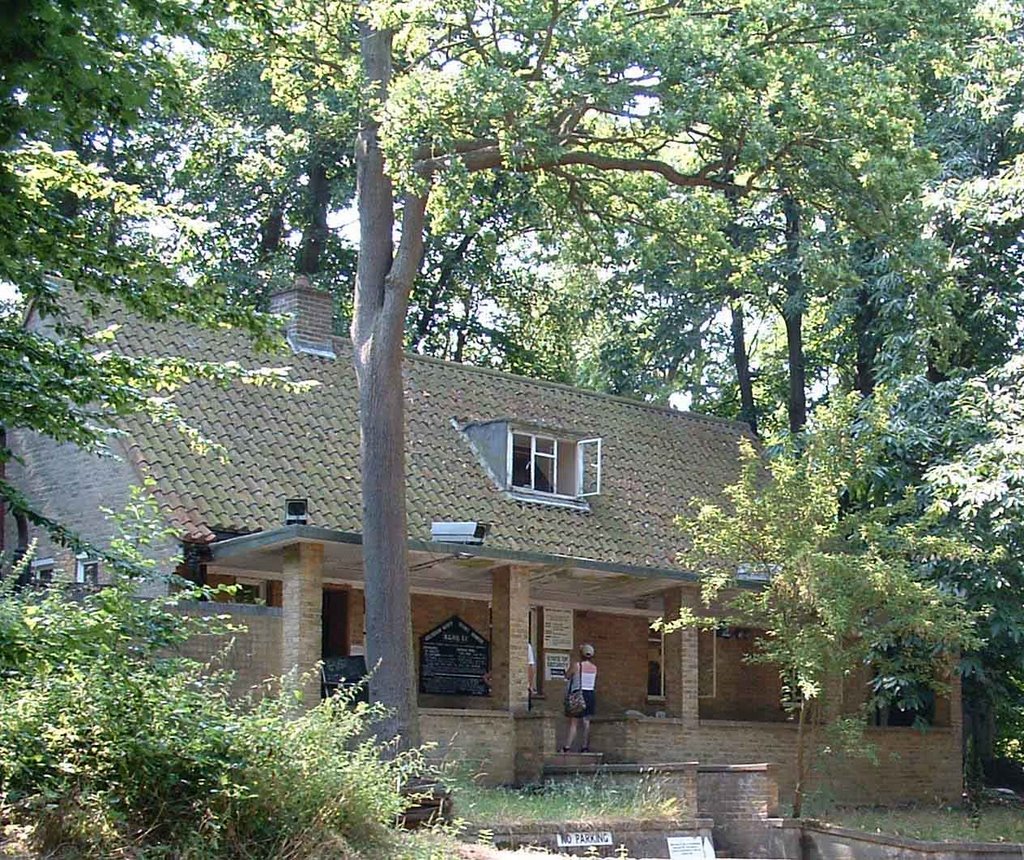
Twenty miles east of London, in the heart of the Essex countryside, there is a fairly innocuous-looking building which is surrounded by a small wood and several dozen acres of farmland.

There is nothing remarkable about this building on the outside. It looks like a poorly-designed 1950s bungalow, but once you enter the front door it becomes a different story...


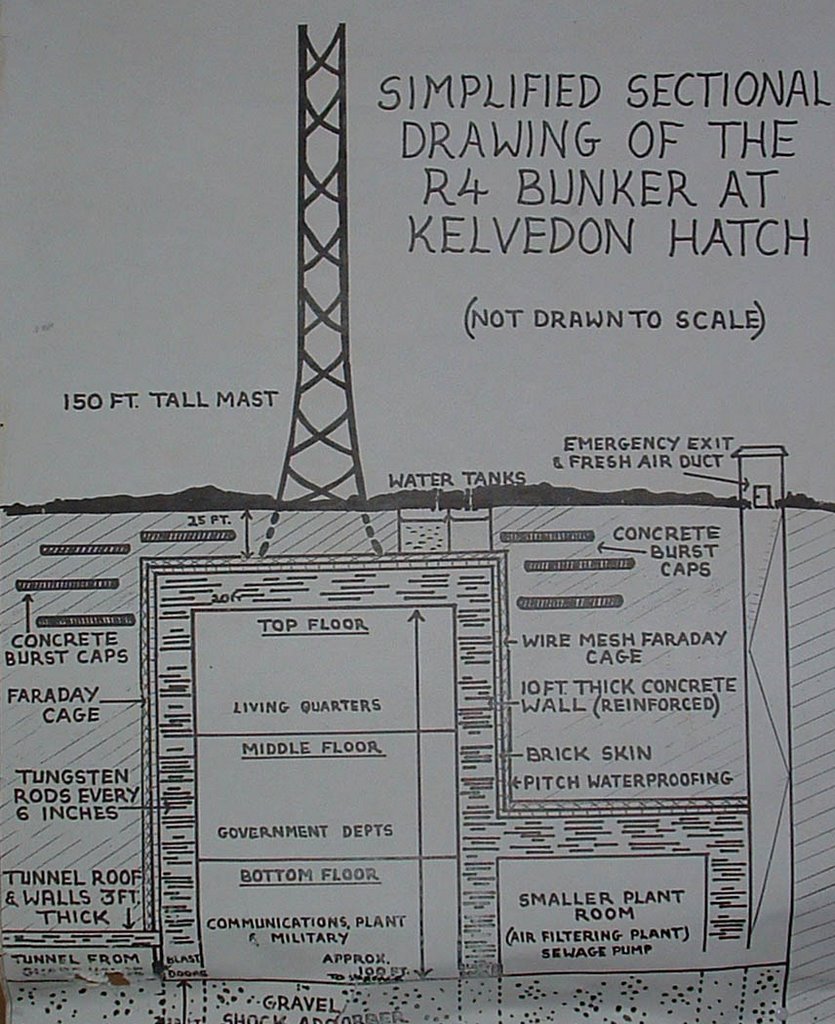
A long tunnel takes you into the heart of a bunker that would, in the event of a nuclear war, have been the seat of the British government. It was decommissioned in the early 1990s. The optimist in me says that this was due to the end of the Cold War, but the pessimist wonders if they didn't build a better bunker somewhere else.

Kelvedon Hatch Bunker is now owned by the farming family whose land was compulsorily purchased by the Government in the 1950s and they have turned it into one of the strangest tourist attractions I have ever visited.


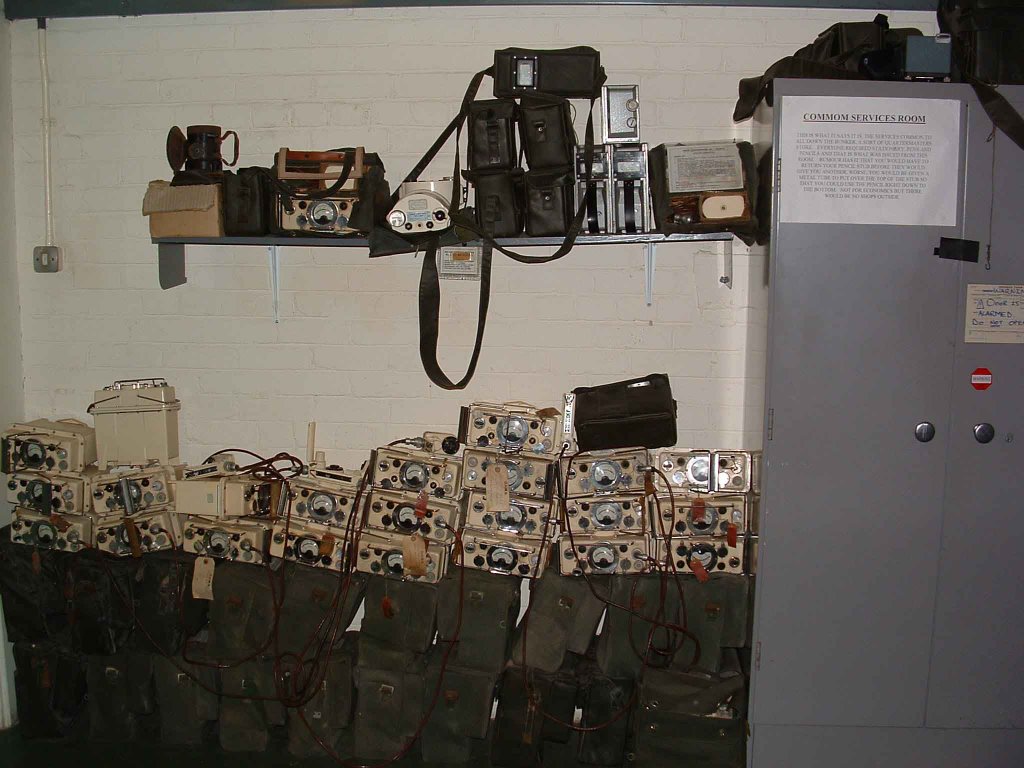
I arrived at the lowest level, which housed a huge engine room. The machines contained everything necessary to ensure that several hundred civil servants could survive a nuclear attack, hermetically sealed from the outside world. There were generators for electricity, air filters and water pumps, plus three months' worth of diesel fuel.


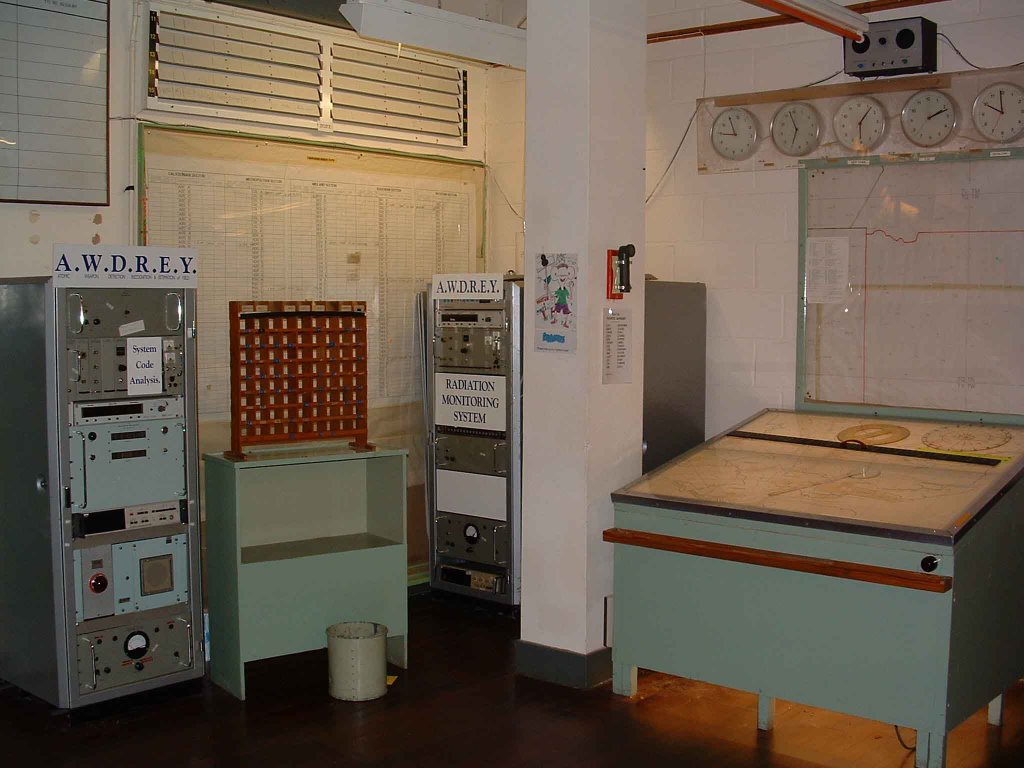
The room below contained equipment named AWDREY - a cosy acronym for something utterly chilling - Atomic Weapons Distribution Recognition and Estimation of Yield.


The AWDREY room also had wooden pigeon holes for staff to store index cards. One row was headed Fatalities, another said Casualties and I tried to imagine the bunker's personnel calmly going about their business, filing the information in the wake of a nuclear holocaust. With the possible exception of the Prime Minister and a few senior staff, no-one was allowed to bring their family with them. How could anyone work in this environment, knowing that their family and friends had either been killed or were suffering from radiation sickness?


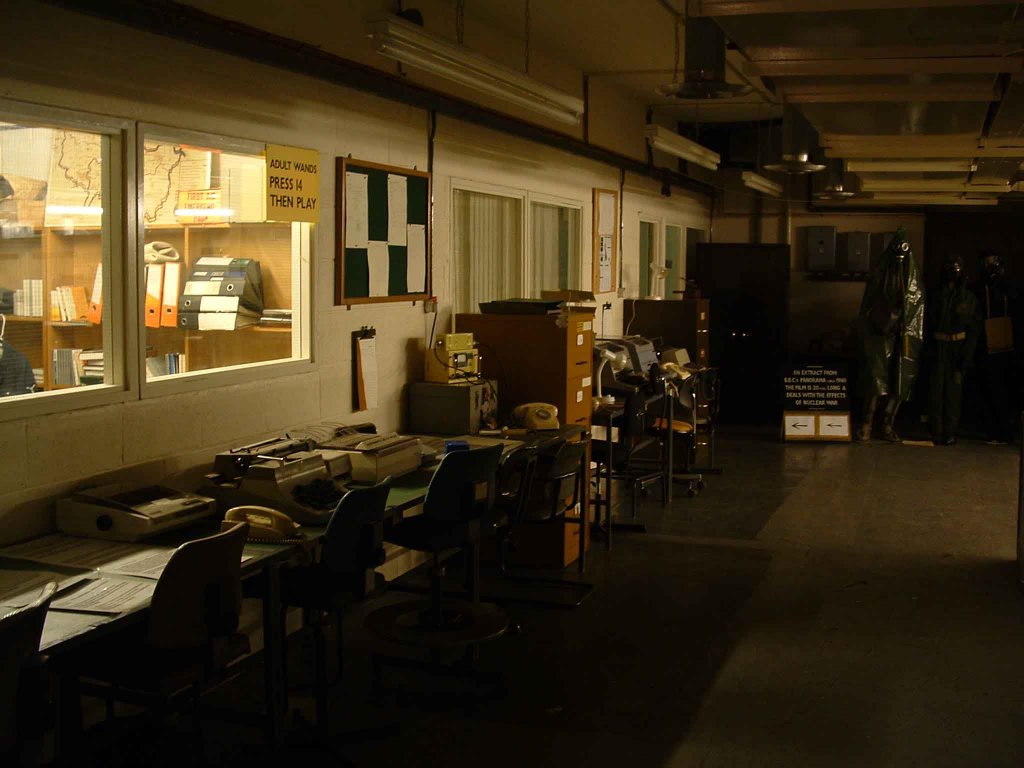
The larger rooms contained row upon row of desks. Some were divided up into ministries with one chair for each. Others were allocated to the armed forces and the police. I also noticed that there was a room for the BBC to broadcast reassuring messages to the nation and a surprisingly spartan bedroom for the Prime Minister with a large map of London on the wall.

With only three months of fuel, the bunker's inhabitants would have to venture outside at some point and there was a plentiful supply of fallout suits and geiger counters. What would they have found once they opened the protective hatch? Research suggests that London and the surrounding area would have been heavily targeted with casualties in the region of 75% plus and there would be little, if no infrastructure for the entombed ministries to govern.

Why was Kelvedon Hatch built? Was it just a strategic tool in NATO's attempt to convince the Soviet Union that it meant business, or did the British Government really think that they could successfully wage a nuclear war and restore some vestige of civil authority afterwards? Either way, it was a terrifying place. The current owners decided to enhance the ambience by playing sound effects of telex machines, four-minute warnings and, in the hospital ward, recordings of men groaning in agony. I do not normally suffer from claustrophobia, but after an hour underground listening to the sounds of bombs and the wailing of the dying, I decided to give the gift shop a miss.

Leaving the bunker was one of the most moving experiences of my life. I walked down a long, dark, corrugated metal tunnel. In the distance the daylight was a brilliant, blinding white. As I emerged from the tunnel I felt the warmth of the sun on my face and saw that I was on the edge of the woods. The world was still here. It is difficult to write this without sounding sentimental and crass, but as I looked at the grass and wild flowers I felt an immense relief and gratitude that affected me for a long time afterwards.

If you fancy a great day out with fun for all the family, visit Kelvedon Hatch's web site for more information.

Monday, October 02, 2006

Ever decreasing circles

I met someone recently who got a job in East Grinstead and decided to move there. If you don't know the place, it's roughly halfway between London and the south coast, has a population of 27,000 and is 5% charming medieval Sussex town, 95% badly designed twentieth century housing. Apparently Daphne from 'Frasier' grew up there, but as far as I know she's never returned.

East Grinstead's problem is that it is neither fish nor fowl. It lacks the excitement and cultural activity of London, but it is also too suburban for anyone to enjoy the delights of a traditional, rural community. Like many small towns in England, the place only really comes to life on a Friday night, when the local kids get drunk and beat the crap out of each other. Happy days.

I felt sorry for him, but then his story became even more tragic. To add insult to injury, he discovered that he couldn't afford to live in East Grinstead and had to move to a suburb called Felbridge. It was hard to imagine a place as small as East Grinstead having a suburb and it reminded me of an asteroid that was discovered around ten years ago. No asteroids are exciting and this one was smaller and duller than most, but it aroused the interest of scientists because it had caught a small lump of rock in its tiny gravitational field and this boulder was now the asteroid's moon, faithfully orbiting it at regular intervals. Here's a NASA photo:

Beneath its bland exterior, East Grinstead harbours a dark secret. It is home to several religious cults, including the Mormons and Scientologists (Tom Cruise and John Travolta have been spotted walking past the local Wimpy Bar). Also, there is an Al Qaeda training camp for would-be suicide bombers.

I worked in East Grinstead for a few months and I have to confess that I was quite happy there. The town was bland, but far less offensive than many places in England. It is a sad fact that most English towns and cities have been ruined by the unholy alliance of the Luftwaffe and 1960s town planners, producing town centres like this:

Fortunately, I'm lucky enough to live in a town that hasn't changed much during the last 100 years and the locals will always give you a warm welcome...