Thursday, March 08, 2007

The storm clouds gather


However bad things are for booksellers at moment, it's nowhere near as awful as the music industry. A combination of mp3 file sharing, DVD rentals and broadband movies-on-demand has already seen established retailers like Tower Records go to the wall and it's only a matter of time before others follow. Next week HMV will announce the results of a strategy review and I have no doubt that there are going to be some redundancies and closures.

As HMV own Waterstone's, this is also going to have an impact on the book trade. Most branches of Waterstone's are profitable but there are a few white elephants, like the huge Picadilly branch and it will be hard for HMV to justify keeping these stores open in the face of a long-term downturn in sales. The big question is how far will sales decline before things botton out and how many shops will go from being profitable to loss-making?

Waterstone's MD Gerry Johnson seems to think that digital downloading will also affect the book trade and that the effects will start to be felt within six months. I'm not convinced that it will be this soon, but there is no doubt that the sales of many reference books will soon begin to bypass the high street. I also agree with Johnson when he said that there was no sense in opening large 15,000 sq ft bookstores any more as even if they paid for themselves now, they won't in a few years.

I'm surprised that Johnson's speech didn't get more publicity as it is one of the most radical statements that anyone in the book trade has ever made and the implications are enormous. Cynics might argue that Johnson's pessismism is simply paving the way for draconian measures, but I think he was just being realistic. We are buggered. At least, we're buggered if we want to carry on doing things the way we always have.

In the past retailers wouldn't bat an eyelid if a new store made a loss for the first few years. Indeed they usually accurately budgeted for that loss in the belief that after a couple of years that shop would break into profit until, by the end of a decade, it had paid for itself several times over. They were usually right. Today, if Waterstone's opened a new branch they would not only have to be certain that it would be instantly profitable, but also be able to remain profitable after a 20% drop in sales. It's a tough old world out there.

From a selfish point of view I have several worries. Number one: will I still have a job this time next year? Number two: how much harder will my work become? Number three: will Waterstone's survive or will they be swallowed-up by someone like Permira? Number four: what the hell would I do if I wasn't selling books? (actually I have several ideas)

As far as bookselling is concerned, I think that the age of big, macho, superstores is over. Small is beautiful and the thing that differentiates a bookshop from an internet retailer is the passion and knowledge of ordinary booksellers. A few years ago it looked as if the age of the traditional high street bookshop was over. In the future we would drive to out-of-town shopping centres which would pull us in like a whale swallowing plankton, extract our money and spew us out the other end. However the future may end up being more like the past, and that is no bad thing.

Monday, March 05, 2007

The weather in Iceland

One of my favourite blogs is the Iceland Weather Report which, although the title may suggest otherwise, is never dull (I would include it as a link, but I haven't worked out how to list my favourite blogs).


Written by an Icelandic woman called Alda Kalda, it is an eclectic mix of confession, criticism and observation, with a tiny little bit of weather thrown in. It also contains some stunning photos, including a new set that she has just uploaded. Whether you're interested in Iceland or not, this blog is well worth a visit.

Sunday, March 04, 2007

Steerforth, J.P


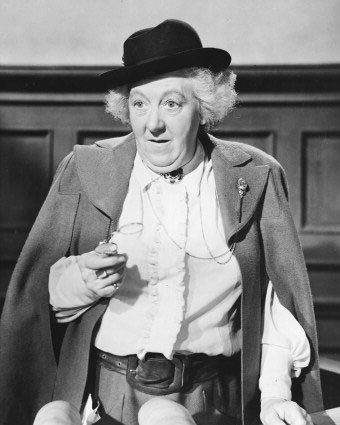
I had always imagined that magistrates were like characters in an Ealing comedy film. They would either be blustery, red-faced, retired colonels or bluestockings like Margaret Rutherford. If anyone had told me that I would end up becoming a magistrate I would have laughed, as I did four years ago when my wife first suggested the idea.

She had seen an article in a local paper inviting people of all ages and backgrounds to apply to become Justices of the Peace. At the time my job was fairly undemanding and my wife thought that I’d find the work interesting and, more importantly, I’d be good at it. I wasn’t so sure. Wasn’t I too young to have the necessary air of gravitas? However, the more I thought about it, the more the idea appealled and after a week I applied for an application form.

The form was quite detailed, asking questions about health, political views, Masonic connections and whether my nearest and dearest had any previous convictions. I also had to select three local people who had known me for more than two years to write a reference supporting my application. I sent the form off expecting to receive a polite rejection. Several months later I was invited for an interview.

Think of the worst job interview you’ve ever had, times it by ten and you’ll get some idea of how I performed in front of the selection panel. With job interviews you can prepare, but I had no idea what sort of questions I was going to be asked beyond the most obvious ones. I sat down in front of a panel of four people who proceeded to pull me to pieces, challenging everything I said to the point where I felt completely stupid. My answers seemed banal and inadequate and I left the room with my self-esteem in tatters. It served me right, I thought, for even daring to think to I could be a magistrate. I had been put firmly in my place.

Several weeks later I was invited for a second interview. I reluctantly went, expecting another humilating hour of being cross-examined, but this time I was given a piece of paper with six hypothetical cases, with multiple choice answers about what sentence I thought appropriate. One of the cases involved a man who was beating his wife and had previously served four weeks in prison for the same offence. The obvious answer seemed more prison and longer, but would it change anything? The case notes said that the man and his wife had three children and apart from these isolated incidents of domestic violence, they were a reasonably happy family. The best outcome was to keep the family together, but only if the violence could stop. I remmbered that there were anger management courses and decided to give him a suspended six month prison sentence with compulsory attendence at one of these courses. I hoped this was the right answer.

The second interview was quite different to the first and once I realised that I wasn’t going to be subject to a humiliating interogation I began to relax. In hindsight I now realise that the purpose of the first interview was to see how I performed under pressure. I can imagine that some people would have lost their temper at the rudeness of some of the questions, or perhaps let slip some sort of prejudice. I had passed by keeping my cool and not saying anything dreadful and now I had been invited back to demonstrate whether I possessed good judgement.

I passed the second interview and a year later, I swore an oath to the Queen in front of a judge. I found the words, which date back to the medieval period, particularly moving and felt privilegd to be part of something that began nine hundred years ago.

I am now a sitting magistrate and so far I haven’t come across anyone who resembles Margaret Rutherford. My colleagues are generally older than me, many of them work in the public sector and quite a few of them are frighteningly intelligent. In my more paranoid moments I wonder if I was only accepted because they needed to fill a quota for younger people, but I hope that in time I will become a decent magistrate.

During the last two months I have dealt with a variety of cases: assault, drunk driving, arson, theft, harrassment and assaulting a police officer. Some of the people appearing in the dock have been fairly unpleasant, but many have clearly been unlucky in life and their crimes have been the result of desperation or stupidity. As a magistrate my job is to protect the public, but I also want to see offenders have an opportunity to change their lives for the better.

I sit with two other magistrates one morning a fortnight, which is the most I can do with my full-time job in bookselling. One of the three magistrates is a chairman and does all of the talking whilst the two ‘wingers’ observe and take notes. If a case is fairly straightforward we will whisper to each other and agree on a sentence immediately, but if it is complicated then we will retire and discuss the evidence until we have reached a decision. Our job is not to know the law – we have a legal adviser to do that – but to make a judgement and ensure that justice is served.

Someone once said that if you invented a legal system from scratch, you probably wouldn’t have magistrates and I agree. It’s ridiculous that 97% of all legal cases are dealt with by unqualified amateurs. What’s even stranger is how well the system works. Every now and then senior governement officials make noises about replacing the magistracy with paid professionals, but the costs would be astronomical. I feel fairly confident that even if we aren’t around for another 900 years, the Justices of the Peace still have a role to play in the 21st century.

*As a footnote to the photo of Margaret Rutherford, whilst searching for a picture of her I discovered that her father was mentally ill and bashed his own father to death with a chamber pot!

Thursday, March 01, 2007

World Book Day


During my time at Ottakar's we were encouraged to do events on World Book Day and there would always be a shop that managed to get a picture in The Bookseller of a member of staff dressed as Charles Dickens or someone sitting in a window reading a book (which always seemed like a way of not doing any work). A week or two later, at the Ottakar's annual managers' meeting, that shop would invariably win an award.

I could never quite see the point of doing 'in-store' activities on World Book Day as the only people around seemed to be pensioners, the mentally ill and a few harrassed-looking mothers of small children. Why didn't we have WBD on a Saturday?

Then, one year, I decided to take the mountain to Mohammed and set up a stall at a local school. It was a revelation. Seeing children, some of whom had never bought a book before, clutching their free £1 vouchers and looking genuinely excited made me realise how important World Book Day is. Yes, it is an opportunity for bookshops and publishers to increase sales and the vouchers are a useful way of driving footfall through the shop, but the most important thing that we can do - if we really do care about reading - is to get out there and make a difference. It's no good just preaching to the converted.

(So what am I doing today? Sitting on my backside at home, of course)

Sadly, not everyone gets the point of World Book Day. Some parents try to use their children's vouchers to buy books for themselves and one charming lady with Elizabeth Duke hoop earrings tried to buy an £18 cookery book with 18 WBD vouchers. I have told staff that they mustn't accept the vouchers for grown-up books (unless a particularly precocious child wants to stretch themselves with War and Peace!)