Friday, January 02, 2026

Still Here

It seems extraordinary that it's 20 years since I started this blog. Where did the time go? 

I have now reached my 60s and seem to be retired. I didn't plan it that way, but when, 10 years ago, I had to close my book business down and become a full-time carer for two sons with health problems, what seemed like a temporary measure turned out to be permanent. My oldest son is now 26, but still lives at home and needs a lot of practical and emotional support. 

Writing a blog used to be a cathartic experience and I also enjoyed sharing the interesting and sometimes absurd things I came across when I ran my business, selling antiquarian books from a cowshed in the Sussex countryside. However, when I stopped working, it was no longer feasible to maintain a blog. Writing about life with my sons would, I thought, be an invasion of their privacy. How would they feel if they stumbled across this blog?

I soon settled into a routined existence of driving my sons to their schools and looking after the house, while my wife began a new career in publishing, where she thrived. It was an interesting role reversal and I saw how energised she became by the job and her daily contact with young people, while my range of daily anecdotes increasingly revolved around minor household triumphs and frustrations: "I tried that new cleaner, but the grout still has mould on it,"

I didn't mind my new life. My wife and I have always been pretty good at swapping roles according to circumstances. But I was aware that I was becoming a little stale and dull. I needed to shake myself up a bit, so one weekend in 2018, I flew to Berlin. It was meant to be a one-off, but turned out to be the beginning of something. 

Over the next seven years, the list of cities grew longer. First Berlin, then Dublin, Copenhagen, Aarhus, Malmö, Krakow, Amsterdam, Hamburg, Oslo, Bergen, Tirana, Lisbon, Strasbourg, Basel, Stockholm, Riga, Sofia, Bucharest, Helsinki, Tallin, Seville, Sarajevo, Munich, Salzburg, Nuremburg, Warsaw, Kaunas, Budapest, Marrakech... I couldn't stop.

Friends wondered how I could afford all of these trips, but I had mastered the art of frugal travel and living near an airport that served several budget airlines, it was possible to travel as far away as Morocco for £30. If my wife was with me, the main expenses were meals and accommodation. However, if I travelled alone, I would save money by staying in a ropey hotel (where I would gourge myself on the free breakfast) and eating at places like McDonald's. I could sometimes have a whole trip for less than the price of a train ticket from London to Manchester.

Each two or three-day trip usually involved a hectic itinerary, where I'd walk miles, visit several museums and galleries and, sometimes, visit a nearby city. My wife sometimes commented that I was trying to squeeze a week's holiday into 48 hours and I suppose she was right. I like to get value for money. 

After seven years of exploring European cities, they have slightly blended into a montage of modern art galleries, tramlines, cathedrals and museums. I've been to so many museums of communist oppression, I can no longer tell one torture chamber from another. 

I think this cartoon perfectly sums it up:

One thing I learned is that a trip is far better if you know someone there. Not only do you have the advantage of their local knowledge, but you also have fun - far more fun than travelling alone ever brings. Visits to Strasbourg, Helsinki, Morocco and Budapest were made doubly enjoyable by the company I had.

Now that I'm entering the winter of my life (at this point my wife rolls her eyes at my maudlin expression), I can't help asking myself how many 'good years' I have left. My parents looked forward to travelling when they retired, but ill health rendered them virtually housebound. I'm determined to make hay while the sun shines. 

My Instagram account shows a life of travel, concert-going and seeing friends, but of course the reality is that 90 percent of my time is spent at home, shopping at Tesco, cooking meals, loading the dishwasher, unloading the dishwasher and putting the bins out. I spend too long on my phone and watch far too many YouTube videos. I do read as much as I can, but my inclusion on lists of book bloggers always felt vaguely fraudulent. 

I used to enjoy blogging, but being fundamentally lazy, it was much easier to write posts when I had an endeless source of amusing book covers, disgarded photo albums and strange ephemera. I could intend to write a post about 1950s children's adventure books, only to find myself going on a tangent about something I did seven years ago. Sometimes the posts seemed to amuse a few people and that was very gratifying. 

This post isn't amusing, but I hope it's been vaguely interesting to anyone who followed the blog in the past. 

And that's all I have to say really. Thank you for reading this far. 

Wednesday, February 16, 2022

Cold Comfort Farms

Ten years ago, I was working on a farm in the middle of a cold Sussex winter, trying to push some huge metal wheelie bins up an ice-covered slope. After falling over several times, I gripped onto the bins as firmly as possible, only to discover that my hands had stuck to the freezing metal. It was not the best of times.

There were lighter moments. Occasionally, we'd stop for a cup of tea and see how long it took for the dregs of our cups to freeze once we'd tipped them on the ground. Meanwhile, in a nearby barn, some mice had taken the used teabags from our makeshift bin and turned them into a cosy little nest. 

I barely knew the people I worked with, but the grim, Siberian labour camp conditions created a sort of camaraderie.

When friends asked me what I was doing, I told them a half truth: I was setting up an online secondhand bookselling business, with a man called Pete. If they wanted to imagine a rarefied atmosphere of antiquarian books, that was fine with me. The reality was harder to explain and I'm not sure I even understood it myself.

It had all happened by chance. A few weeks earlier, I'd been approached by someone I vaguely knew who'd heard that I'd recently left an online bookselling job to set up my own business. Pete invited me to a local pub and, over a pint of Harvey's, produced a succession of Excel spreadsheets that showed how the two of us could make our fortune. My bookselling experience combined with his business acumen would be, he argued, be a winning combination. 

I wasn't convinced, but it was flattering to be asked and, after all, what did I have to lose? Pete proposed that we ran two separate, but linked, businesses, so I would still have the independence I needed, but with a guaranteed supply of books. I mulled it over that evening and said yes the following morning. 

The farm was 10 miles away, in the middle of the Sussex countryside and was owned by a gypsy family. For reasons I never fully understood, they all seemed to be called Billy and lived in a static home which was occasionally turned 90 degrees to the right or left, perhaps as a homage to their nomadic past.

Pete had sublet a barn from the family and had established a small business selling penny paperbacks, but had no idea what to do with all of the older, non-barcoded books. My role was to go through the stock, sort out the wheat from the chaff and find a way of selling the books online. I'd already done this in my previous job, so what could possibly go wrong? 

I soon had my answer. Several weeks of sifting through books ridden with mouse droppings in subzero temperatures took its toll and I developed pneumonia. I hadn't taken it that seriously until I saw the look on my doctor's face after she'd tested my lung capacity. It was time to stop. The rest of February was a write-off, spent mostly in bed.

By the beginning of March, I felt able to go back to work and found Pete in an ebullient mood. He had just bought a large van, which meant that we could move our stock around between different premises. All I had to do now was find a suitable location for my part of the business. 

How did one go about finding suitable properties to set up an internet bookselling business? I had no idea, but like any sensible person I tried Google and eventually found this.

After my spell in the icy gulag, the new site felt like paradise. The owner was a gentleman farmer whose wife ran a B&B for visitors to Glyndebourne and his other tenants included the official glovemaker to the Queen. Every time I opened the door, I felt of rush of pleasure as I looked at the view:

I could have quite happily spent my days sitting in this empty building, just looking at the view and listening to music. If only such jobs existed. Sadly there was rent to pay, so I had to start focusing on the nuts and bolts of the business. Literally:

It took two weeks to assemble the giant Meccano sets masquerading as shelving units, one nut and bolt at a time. It was indescribably tedious and if someone had told me that I'd have to disassemble it and reassemble it somewhere else, six months later, I might have felt like giving up.

Along with the shelving, there was the other minutiae to consider: postage, computers, printers, furniture, setting up a BT account, banking and stationery. Even something as simple as a packing slip required HTML skills that were way beyond my abilities, but somehow I had to learn. Gradually, it was beginning to take shape, but there was one thing missing: staff.

Fast forward to a month later and it was impossibly idyllic. I was working in a beautiful rural setting with two postgrads and a member of the cast of The Archers, which added to the bucolic atmosphere. We spent our days sorting through old books in a cosy little office, accompanied by the soothing strains of a French classical music station. What more could anyone want?

Sadly, it was too good to last. Our business generated a lot of waste and our landlord had made it very clear that he didn't want his B&B guests disturbed by the sight of wheelie bins, or woken up by any early morning waste collections. I couldn't argue with that. If I was in the land of Nod after a night's Gotterdammerunging, I wouldn't want a dawn chorus of "ATTENTION! THIS VEHICLE IS REVERSING!"

So far, I'd managed to use Pete's van to take our unwanted books away, but that took two hours out of my day. Also, Pete's bargain van was rather erratic and, without any warning, things would suddenly stop working. On one occasion, I was driving to a warehouse in Birmingham and discovered that the windscreen wipers weren't functioning. I pulled over and texted Pete:

"Got to turn back. The wipers aren't working." 

Pete quickly replied: "Is it raining?" I replied that it wasn't, but it might start raining at some point in the journey, in which case I'd be in a bit of a pickle. I think Pete thought that I was being an old fuss-pot.

The business model was simple enough. We received bulk deliveries of old, pre-ISBN books and sorted through them, identifying any titles that might be worth selling. It doesn't take long to learn which books have no value at all in the secondhand market - things like everyday bibles, old textbooks and Victorian poetry anthologies, or titles like Little Women, Reach For the Sky and anything by Walter Scott. 

Sadly, these books are sent off to be pulped as nobody wants them, particularly the charities who have just sold them to us as a waste product. If the books have nice covers, they may have a future lining the shelves of some faux olde worlde pub, but most will end up in places as unlikely as road surfacing material. In a normal one tonne delivery, anything up to 90% of the books end up being thrown away.

I resisted leaving my rural idyll for as long as possible, but I had to face facts: the business was generating too much waste for our genteel setting. I had to find a new home for the books. After a few fruitless weeks of searching online, I found this:

It was as grim as it looks in the photo, but it was big and cheap - perfect for a growing business. We could have as many wheelie bins as we liked and receive deliveries from articulated lorries. However, expecting my staff to work in a large barn, particularly as the weather got colder, was asking too much. How could I provide them with a decent office space?

Fortunately, I had a brainwave:

I won't claim that my garden shed idea matched the splendour of our previous office, but once I'd installed decent lighting, a couple of heaters and painted the inside a bright colour, it was tolerable. Perhaps we might have been contented there, but unfortunately things took a turn for the worse.

Impressed by the size of the barn, Pete decided that he'd like to set up a little sideline there and employed the first four Polish men who responded to his Gumtree advert. They were perfectly pleasant individuals, but had a penchant for drinking vodka in the morning. Once Pawel and his chums had reached a suitable state of inebriation, they would amuse themselves by performing stunts with a forklift truck (those things can move a lot faster than you might imagine). Occasionally, the forklift would almost crash into our office, veering off seconds before impact. 

To add insult to injury, they played Heart FM and, on one occasion, I had to listen to Adele  accompanied by the cry of a bull being sodomised by one of its stablemates in an adjacent barn. It was at moments like this, I wondered where I had gone wrong.

But in spite of my reservations, the business worked. The sales slowly but steadily grew as we added books to our inventory and received orders from all over the world. Having a global marketplace meant that even the most obscure book stood a reasonable chance of finding a buyer. In a bookshop, I strongly doubt that our 1920s book about UHT milk production would have sold, but online we found someone in Uruguay who couldn't wait to read it.

After a year, I thought I'd developed a pretty good business model. The overheads were low and the turnover was growing month by month. But I hadn't foreseen that there would be a number of obstacles to our progress. Here are five of the worst:

1. Animals

Being a townie, I was under the naive impression that we were the sole occupants of our barn, but I soon learned otherwise. From a robin's point of view, our bookshelves were just a suitable place to build a nest.

When the eggs hatched, we had to tread very carefully, hoping that we wouldn't frighten the mother away from feeding her birds. This meant that if any poor soul ordered a book near the nest, I had to cancel the order. Of course, I couldn't tell them why, so I had to invent a vaguely plausible excuse and hope that our rating wouldn't suffer.

After a few weeks, the birds flew away, leaving several pecked, soiled books as a souvenir of their visit.

The poor Poles who worked in the open barn also had to contend with birds defecating on their computer monitors and keyboards, which must have added insult to injury. 

In addition to birds, we shared our barn with amphibians:


But the most bizarre moment was when we saw a mink casually walk past with a rat in its mouth. The moment it noticed us, the mink jumped and let go of the rat. Seeing an opportunity, the rat scuttled off into a narrow gap by the door and hid. When we returned after the weekend, we found the mink lying dead with its legs in the air. Next to it, was a huge pile of rat droppings.

Our uninvited guests may have thrown the occasional spanner in the works, but overall they provided many comedic moments and I grew to love the absurdity of it. I also cherished the moments when a robin would land a few feet away and patiently watch me unpack my deliveries. Perhaps he was hoping for a bookworm.

2. Couriers

I thought I'd set up a foolproof system. Rather than faffing around taking parcels to the nearest post office, I'd found a courier who would do all the hard work. All we had to do was put the UK orders in one mailsack and international orders in the other, then someone would come and collect them. It all worked very well until the day nobody turned up. 

After a number of unanswered phone calls, I discovered that the company had gone bust. They had several days' worth of our orders in their warehouse and for the next few weeks, I began each day issuing refunds and apologising to angry customers. Our rating dropped as a result and fewer orders came in, which was probably just as well, as there was nobody to collect them. 

I learned my lesson and signed up to one of the biggest couriers in the country. They went bust too.

3. Gravity


For no discernible reason, our Meccano shelving units would occasionally collapse under the strain of our growing inventory of books. The metal would buckle to the point where repairs were impossible. It was very annoying.

Gravity also nearly led to my premature demise when this teetering pile of boxes was delivered. 


It looks harmless enough here, but when this half tonne pallet was five feet above me on the back of a lorry, wobbling menacingly, I wasn't terribly happy about it. The delivery driver didn't inspire confidence when he said, "Looks as if it might fall off, mate. Can you stand underneath and try and keep it steady?" Like a fool, I complied because I wanted to show that I was also a proper man, just like him.

4. Suppliers

Like couriers, suppliers can suddenly go into receivership without any warning. Even if that doesn't happen, they may decide that my few hundred quid a month isn't enough of an incentive for them to bother separating their old books from the new, preferring to sell them to a waste paper merchant.

5. Partnership

Business partnerships are tricky at the best of times. Pete and I were like Del Boy and Rodney. Pete was a geezer and although I liked him personally, I didn't agree with the way he avoided paying people to extend his credit. Occasionally, his 'entrepreneurial' approach would land him in deep water and more than once his business teetered on the brink of disaster.

I was definitely a Rodney. I used to worry if I was a day late with my payments and liked to do everything by the book.

Eventually, Pete and I reached an amicable separation, but continued to help each other out and share premises.

Without Pete's quest for global domination, I no longer felt under pressure to expand and decided to continue as a one-man operation. The business was at a level where it ticked over nicely and I was contented sitting in my small office, listening to music, sorting through the random selection of books that passed through my hands.

The job was a strange mixture. One part of it involved sitting in a warm, cosy office, listening to Bach and looking at antiquarian books. The other involved mundane manual tasks, like trying to push heavy wheelie bins through the muddy surface of a farmyard. The physicality of the work could be particularly draining - if you've ever had to load and unload one and a half tonnes of boxed books, you'll know what I mean.

But although the chores could be repetitive, the books themselves were endlessly fascinating, ranging from the sublime to the ridiculous. Although most of the stock was rubbish, literally, a delivery could yield all sorts of surprises, from a signed first edition by Siegfried Sassoon to a letter written by Paul Nash. 

If things had gone as planned, I'd probably still be in my cowshed now, assailed by weasels, toads and robins. However, a few years ago, my wife won funding from the local authority for our son to go to a school that specialised in teaching autistic children. As I was the only one who could take him there (and be on call to collect him if he had a wobble), my wife and I decided that we should swap roles. I tried to continue running my business on a part-time basis, but it didn't work and I very reluctantly said a final farewell to bookselling. 

Five years on, I am still at home, bored senseless and doing a terrible job at running the house, while my wife is developing a blossoming career as a freelance editor. Sometimes I fantasize about resurrecting Steerforth Books, even if it meant having to start from scratch again. But whenever nostalgia strikes, I remember the darker side of the job: the mud, the Heart FM, the near-death incidents, the rats and the back-breaking deliveries. 

And it still isn't enough to put me off. 


Sunday, August 08, 2021

Journal of a Plague Year

2020 was going to be a good year. Holidays were booked and my older son, whose crippling anxiety had made him virtually housebound, was about to begin a programme of treatment that would gradually help him overcome his fear of the outside world. There seemed to be a lot to look forward to.

Of course, there were various reports in the news about a deadly new virus in China, but hadn't we heard it all before when we were warned about mad cow disease, bird flu and Ebola? These things always fizzled out. Even when the Italians were warning us that we were two weeks away from a crisis, people said "Ah, but that's the Italians. They're very tactile. It won't spread as quickly over here."

As the number of UK cases began to rise, I was still busily planning a weekend break in Luxembourg, while Boris Johnson was busy enjoying a two-week holiday with his girlfriend. Crisis? What crisis?

In hindsight, perhaps we were dutifully following Elizabeth Kübler-Ross's model for the five stages of grief, the first of which is denial. We told ourselves that the number of people with Covid-19 was only 12...37...93...168...279..., but by early March, creeping doubts were beginning to set in. Perhaps we were heading for a scenario that was more like this:

Within just a few weeks, denial quickly became replaced by anger and fear. How did we sleepwalk into this position? Who was to blame? Should we let the virus sweep through society until herd immunity was achieved, or should we batten down the hatches and risk destroying the economy?

After some Olympic-level dithering by Boris Johnson, the hatches were battened down. All non-essential travel was banned and a silence seemed to descend on the world. The normally thriving streets of Lewes became eerily deserted.


My son's CBT sessions for his agoraphobia were cancelled. After two weeks of being reassured that the outside world was a safe place, he was now being told that actually it wasn't and that it would probably be better if he stayed indoors. He willingly complied.

It was the best of times, it was the worst of times. The first lockdown coincided with some unseasonably warm weather and many people enjoyed this unexpected holiday. The distant roar of traffic was suddenly replaced by birdsong and, in the field behind our house, children started to build makeshift dens and swings. It seemed like a glimpse of a more benign world. 

However, things were starting to turn ugly at the supermarkets, as a mass hysteria developed over a potential shortage of toilet paper. In some city-centre stores, fights were breaking out over the right to have a clean bottom and, while I saluted the protagonists' commitment to personal hygiene, it seemed a baffling thing to come to blows over. 

The toilet-paper crisis was swiftly alleviated by the beginning of food shortages, which meant that fewer trips to the loo would be required. Gripped by a fear that society was on the brink of collapse, people started buying up all the dried pasta and rice they could find. On a trip to Tesco, the whole meat aisle was empty, apart from two packets of Heck pork sausages.

We were quickly reassured that there was no shortage of food; we were just trying to all buy it at the same time, which made it very hard for the supermarkets to replenish their shelves quickly enough. At this point, Tesco swiftly instigated their National Emergency Plan:


Unlike the UK government, Tesco had prepared for this eventuality and, thanks to socially distanced queuing and a limit on the number of customers allowed in the store, the food shortages swiftly ended. I sometimes wonder if the Government should have resigned and handed over the reins of power to Tesco, who seemed to possess a sense of direction that Boris Johnson lacked.

On the home front, I instigated what was, in hindsight, an absurd "dig for victory" campaign in our garden, turning part of the lawn into a potato patch and planting grow bags full of tomatoes. The end result is that, several months later, we had more cherry tomatoes than we knew what to do with and enough potatoes to delay death from starvation by a mere three days.

But while my attempts at self-sufficiency might have been laughable, the local area came into its own. Many local farmers and market traders set up veg-box delivery services and every week we enjoyed a selection of fresh vegetables and fruit, all of which were apparently grown locally. It was a revelation; I had no idea that we grew avocados in Sussex.

Our veg-box deliveries quickly became the highlight of the week; partly because we hadn't spoken to another human being for days (I don't count the awfulness of a Zoom session as human contact).

Another thing that impressed me about the local area was the community spirit that quickly grew. A campaign by the Royal Voluntary Service to recruit people to help the NHS received around a million responses, while, on a more local level, neighbours began to shop for each other and provide lifts for medical appointments.

Encouraged by this growing neighbourliness, my wife and I volunteered to do a weekly shop for the elderly couple next door. They were both as deaf as a post, so it seemed like a good idea when the husband suggested sending their shopping lists to my wife by email.

It all worked very well at first. Every week, my wife would received a shopping list that seemed particularly focused on prunes and bran (but never loo paper, strangely), which we would then print off and take to Tesco. But then, other emails started to appear and their tone began to acquire a more disturbing nature.

At first, it was simple innuendoes, which we put down to the attitudes of a different generation. But then the content started to become more explicit. I'm not quite sure why a man born in 1935 felt compelled to share his sexual history with my wife. He seemed to imagine that he and my wife had a special connection and would send creepy emails with lines like, "I noticed that you were up very late last night". As the saying goes, there's no fool like an old fool.

Thankfully, the rest of the people in our road were better behaved. Nobody subjected us to any impromptu live gigs or salsa-dancing sessions and the slightly Orwellian hand-clapping sessions never quite took off. There was a vague attempt to have a VE Day street party, but I felt under no compulsion to join in.
Life went on. At first, many of us were so terrified of ending up on a ventilator, we regarded a panting jogger or cyclist with the same horror as someone wearing a suicide vest, while a random cough in a supermarket saw people fleeing in all directions. Fortunately, the fear gradually subsided and as the death rate began to fall, some restrictions were lifted.

The 'new normal' was like the old normal, but with masks, handwashing and a Cromwellian ban on public fun. I welcomed the introduction of table service in pubs and the ban on social kissing and hugging was an added bonus, but overall it was a strange, melancholy time.

To complicate things further, my older son had his first epileptic fit and had to be rushed to hospital. He had been found by his younger brother and, for weeks afterwards, every strange knock or bang would send our younger son rushing upstairs to see if everything was all right.

The one highlight of that lost summer was a trip to North Yorkshire, where an old friend gave me a guided tour of the local moors. It was exhilarating to be somewhere different. Indeed, I felt the same level of excitement that I usually reserved for exotic, foreign holidays.

But on the way back, reality crept back in. Kings Lynn was a ghost town and I spent a rather lonely evening eating a very indifferent meal, alfresco, in a deserted market square. Where had all the people gone? On the other hand, perhaps this was normal for a town next to the Fens. Did they all come out at night?

I had thought that a visit to the quaint coastal village of Blakeney might provide some semblance of normality, but even here, it was impossible to escape from the bogeyman. Wandering around the deserted streets, I felt as if I was in an episode of Doctor Who.


But the worst was yet to come. Having a lockdown in the spring was one thing, but shutting the country down for three months during a relentlessly grey, wet winter was another. People who had never suffered from mental-health problems now found themselves experiencing depression for the first time in their lives. I stayed at home, watched television and put on a stone, courtesy of Mr Kipling.

Fortunately, there was light at the end of the tunnel and, after a succession of balls-ups, the British government finally got something right with its vaccine programme. My son's epilepsy diagnosis pushed him to the front of the queue and he received his first Pfizer jab.


As his carer, I was also bumped up the queue and a few weeks later, I received my first AstraZeneca vaccine. On both occasions, I was really impressed by the efficiency of the whole process and the dedication and patience shown by the staff, particularly the volunteer vaccine stewards. Indeed, I felt so grateful, I ended up becoming a vaccine steward myself. 

Being a vaccine steward was exhausting. In Brighton, I was on my feet for six hours, with just one 15-minute break. The work was monotonous but vital, as it meant that the NHS staff were able to get on with their jobs rather than wasting time directing people. According to my phone, in an area that was a mere 25ft long, I walked over 8000 steps.

After the miserable winter lockdown ended, I took a train to London and discovered that it was still closed. 

I suppose the empty train and PPE vending machine at Lewes Station should have given me a clue. But the idea of a deserted city seemed the stuff of science-fiction films, where the silence was only broken by marauding triffids or gangs of looters. In Trafalgar Square, three police vans were parked on the perimeter and I realised that I was under observation, which was a little disconcerting.

Since then, life has gradually returned to normal. Relaxing the rules resulted in a spike of new Covid cases, but that now seems to be in reverse and the number of people wearing masks in crowded places is slowly declining. Friends have started kissing again, so we're now back to the nightmare of trying to remember if so-and-so is a one- or two-cheek-kissing person.

Overall, I wouldn't say that Covid-19 has had a huge impact on my life. The people who have suffered have been the young, those who haven't been able to see loved ones and, of course, those who caught the virus. I was already leading a life of self-isolation looking after my sons, so the lockdown didn't change things much for me.  

However, I did learn one important lesson: make hay while the sun shines. Spend more time with friends and loved ones, visit the places you've always wanted to see and don't spend all your days at home eating Mr Kipling's Almond Slices. I hope that there won't be another long year like this in my lifetime, but this is, after all, an age of uncertainty.

Tuesday, January 08, 2019

Since Then


For part of the 1970s, London-based viewers of the TV soap 'Crossroads' were six months behind the rest of the country. I can't remember why, but I do recall that part of the excitement of going on holiday was being able to watch an up to date episode. It was like travelling into the future.


As with all good time travel stories, I was shocked by some of the things I saw. Why was Sandy in a wheelchair? What had turned Amy Turtle into a common thief? Where was Ted Hope? How could so much happen in six months?

In the end, Thames Television decided to catch up with the rest of the UK and a special update was filmed, with motel owner Meg Mortimer explaining what had taken place in King's Oak.

As it's been a long time since I've written a blog post, I thought I'd emulate Thames and provide a brief update of what's happened here.

1. I Have a New Home

When my mother died, I'd hoped that we'd finally have the opportunity to swap our terraced Victorian broom cupboard for a decent-sized house in Lewes, where I could hide from people and everyone would have the space to potter around. By decent, I mean normal; a three-bed semi with a garage and a garden longer than 20 feet.

Sadly, I soon realised that my small inheritance wouldn't even cover this modest ambition, as the prices for non-terraced houses suddenly shot up. Disheartened, I began to think the unthinkable: leave Lewes.

Long story short: we now live just outside Lewes, in a detached house with a view of the South Downs. Thanks to postcode snobbery, it was almost exactly the same price as our old house. I love it.

2. I Am No Longer Gainfully Employed

In a normal family, my older son would probably be at university by now or in full-time employment, while his younger brother would be going to the local school and hanging out with friends. None of this has happened. Instead, I have gradually become a full-time carer to both boys, home educating the younger one.

There are two types of people who home educate their children: those who want to and those who have to. I am firmly in the latter camp and would far rather be working. For all its frustrations, work brings camaraderie, a sense of purpose and, of course, money. At the moment, my time is spent almost entirely at home, as neither boy likes going out.

After six months of this, I started to go a bit stir crazy, so my wife very kindly suggested that I went off on a little jaunt somewhere. This turned out to be a very good idea and I am now making full use of EasyJet's cheap flights. Visiting a city like Berlin certainly clears away the cobwebs and stops me feeling that my life is in a complete rut.

As for the home education, although I may be a reluctant teacher, I am trying my best to ensure that my son has a thorough grounding in the basics, but is also free to follow his enthusiasms and passions. Sometimes we'll read a book together, but at others we might watch a film or YouTube clip and discuss it.

So far, my son seems to be enjoying his lessons and is much happier than he was this time last year, so I'm quietly hopeful.

3. Reading Helps

It can be hard to maintain a positive outlook when you see your loved ones struggling. I feel haunted by the ghost of the carefree childhood that my older son never had. I have been assured by professionals that we did all the right things, but it is hard not to experience a residual feeling of failure. We do not bring children into the world to suffer.

On gloomy, winter days, I wonder if this is it. Will I work again? Will my sons ever find their way in life and if not, what will happen when we are old? Will I even make it to old age if I live a life where I rarely get any exercise, because my son won't go out but doesn't like being left alone?

Of course it's ridiculous to think along these lines and when I worked, I was far too busy. But during the afternoons, when the lessons are finished and lunches eaten, my quiet time can be a mixed blessing, so thank God for the novel. What greater pleasure can there be than getting stuck into a novel like Buddenbrooks, spending hour upon hour in 19th century Lübeck?

Blogging also used to be cathartic, but without the stimulus of work and travel, I've been rather short of material. I haven't wanted to share my recent experiences because I didn't think it wouldn't be terribly entertaining, but I'm not quite ready to join the increasing number of people who have given up blogging.

I will try to ensure that my next post is more amusing.

Thursday, October 04, 2018

A Year in Books

This post originally appeared on my other, now defunct blog, in December 2016.


At the end of last year, my wife and I swapped roles. It was an easy decision, as I was the only one of us able to drive our sons to their new schools. My wife joined a publishing company and thrived, while I joined the world of stay-at-home fathers, and withered. However, although this has been a challenging year, I've been grateful for the opportunity to read more books than ever. I began the year by resolving to abandon my Kindle and enjoyed some serendipitous discoveries in charity shops. However, almost a year on, my teetering piles of books have reminded me why I bought a Kindle in the first place. Here are a few of the titles that made a particular impression on me: 

 1. SURPRISINGLY TOPICAL READ OF THE YEAR

Philip Roth's novel 'The Plot Against America', published 12 years ago, takes place in an alternate timeline in which Roosevelt lost the 1940 Presidential election to Charles Lindbergh. At the time, a story about an experienced politician losing to a celebrity with fascist sympathies and no experience of government seemed rather far fetched. Of course, Hillary Clinton is no Roosevelt and Donald Trump is no Lindbergh, but the essential message of this book is worth heeding: democracy can become quickly debased if we allow it. 

philip-roth-2 

 2. BETTER THAN EXPECTED READ OF THE YEAR
I'd always assumed that Norman Collins' novel 'London Belongs to Me' was a dreadful old potboiler, so it was a pleasant surprise to find that for all its faults, it was a compelling and vivid evocation of London on the eve of the Second World War. Set in a boarding house that has seen better days, the novel eavesdrops on the lives of its occupants with insight and humour. 

london-in-the-1930s

The perfect comfort read, 'London Belongs To Me' has been reissued as a Penguin Modern Classic, with a glowing recommendation on the cover from Sarah Walters.

3. RANDOM CHARITY SHOP DISCOVERY OF THE YEAR


The name VS Prichett meant little to me apart from his occasional appearance in short story collections, so I was intrigued to find a novel by him in the Lewes branch of Oxfam. Largely set in the Amazon jungle, 'Dead Man Leading' reads like a Conradian tale as written by Evelyn Waugh, with a finely-tuned sense of the absurd. But although it is faintly reminiscent of the last part of Waugh's own 'A Handful of Dust', Pritchett has a clear, confident voice and the result is a book that is odd and unsettling, but strangely compelling.
 v-s-pritchett-1990-92-27-41-800x418

4. DYSTOPIAN NOVEL OF THE YEAR


'The Life & Times of Michael K' by JM Coetzee was published in 1983, winning the author his first Booker Prize. There is an awful lot of dystopian and post-apocalyptic genre fiction being published at the moment and some of it is very enjoyable, but Coetzee's brilliantly stark vision has yet to be matched.

5. BEST NEW THRILLER

I enjoy a good thriller and with a Kindle I can read any old trash without anyone knowing, but I've no patience with books that suffer from lumpen prose, implausible characters and cliche-ridden dialogue, no matter how good the plot is. Fortunately, Sabine Durrant's 'Lie With Me' is a cut above the average thriller and a worthy successor to Patricia Highsmith, intelligently written and well plotted.

I thought it was much better than the overrated 'The Girl on the Train'. Durrant does a very convincing job of narrating the story from the perspective of a man in his early 40s and her depiction of an affluent South London family rings horribly true. I also enjoyed her evocative descriptions of a Greek island, written in a clear prose style that avoids the overwritten cliches of many genre novels.

6. NON FICTION BOOK OF THE YEAR

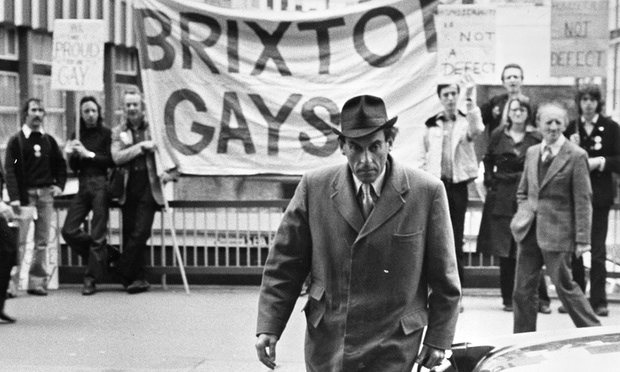
The subject of John Preston's 'A Very English Scandal' will mean little to anyone under the age of 45 and absolutely nothing to anyone outside the UK, but it is a story that will appeal to many. Jeremy Thorpe was the charismatic leader of Britain's Liberal Party, with a lust for power that was only exceeded by his penchant for young men. When the latter threatened the former, in the guise of a troubled individual called Norman Scott, Thorpe asked a friend to have him killed.

Beyond some smutty 1970s playground jokes ("What do Jeremy Thorpe and Captain Kirk have in common?), my only memory of Thorpe was a sympathetic one - a good man defeated by the bigotry of a different age. How wrong I was. The Thorpe that emerges in these pages is a charming psychopath, callously exploiting the extraordinary loyalty of his friends and family to further his political career.

jeremy-thorpe

'A Very English Scandal' reads like a thriller and is utterly gripping from start to finish.

7. OBSCURE CLASSIC OF THE YEAR

'The Serious Game' is an extraordinary 1912 novel by Hjalmar Söderberg, who in his native Sweden is regarded as the equal of Strindberg. On the face of it it's a simple enough tale of a young couple who fall in love, but end up being unhappily married to other people. What's remarkable about the book is its modernity and insight, containing a candour that no English novelist would have dared to attempt in Edwardian Britain.

8. FORGOTTEN MASTERPIECE OF THE YEAR


'The Deadly Percheron' by John Franklin Bardin is one of those rare novels that transcends its genre. What begins as a rather eccentric mystery novel set in New York quickly changes gear, taking the reader on a strange journey into the darker recesses of the human pyche, where nothing is what it seems. Written in 1946, this novel has been largely forgotten since it was republished by Penguin during the 1960s, but has enjoyed a cult following.

9. MOST HARROWING READ OF THE YEAR

svetlana-alexievich

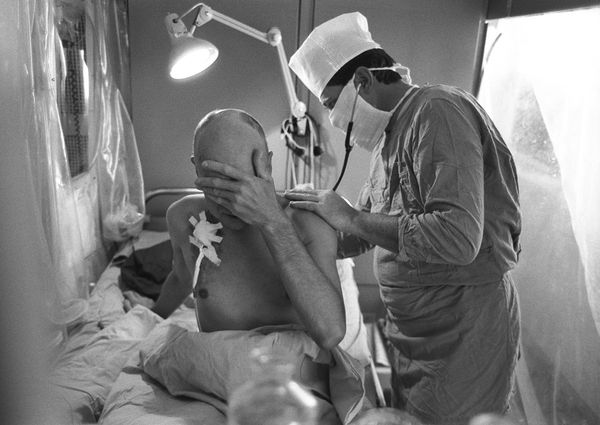
'Chernobyl Prayer' by Svetlana Alexievich is a brilliant piece of reportage, collecting eye-witness accounts of people affected by the Chernobyl disaster in 1986. One of the most shocking stories relates how some robotic devices - sent in to move irradiated graphite rods - kept breaking down after a bried period of exposure to radiation. In the end, men were dispatctched to pick the rods up by hand, wearing only the flimsiest of protective suits.

Told that they couldn't have more than 40 seconds' exposure to the graphite, the men soon discovered that it was impossible to do anything in under two minutes and went ahead regardless. For me, the most harrowing part of the book was reading a wife's account of how she nursed her husband during a long, debilitating and painful illness, following his exposure to a massive dose of radiation. When he finally died, his body treated as radioactive waste, buried in a lead-lined coffin.

chernobyl

But if this all sounds too upsetting, I should also add that 'Chernobyl Prayer' also contains some remarkable stories of heroism, compassion and survival. It is a gripping read that reveals the best and worst of humanity.

10. SILLIEST BOOK OF THE YEAR


I really enjoyed Dorothy Hughes's 1940s noir thriller 'In a Lonely Place' and was keen to explore her backlist. Sadly, 'The So Blue Marble' is one of the most ridiculous books I've ever read, with an implausible plot and a selection of unbelievable characters. Thinking that Hughes must have had an off day, I tried another novel by her and was equally nonplussed.

11. LIGHTEST HEAVY BOOK OF THE YEAR


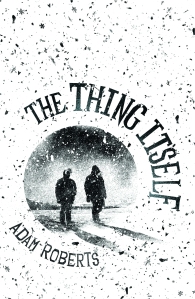
Adam Roberts' 'The Thing Itself' is a high concept novel that bandies ideas about Kantian philosophy, quantum physics and artificial intelliegence around with the ease of someone talking about the weather. A description of the plot would be no help at all. All I can say is that it's a playful, witty, knockabout tale that wears its cleverness lightly and is consistently funny.

thing-itself

12. BEST NOVEL BY A BALD, SOUTH AFRICAN EMIGRE

I'm a big fan of Justin Cartwright and really enjoyed reading his 2002 novel 'White Lightning'. With a narrative that alternates between South Africa and England, this is a poignant tale of grief and loneliness that is redeemed by the author's wit and humanity. I was particularly amused by Cartwright's description of a 'saucy film' shoot, only to later discover that in the 1970s, he wrote the screenplay for 'Rosie Dixon - Night Nurse'.

These were the books that made a big impression on me, but I should mention that I also really enjoyed Kate Summerscale's 'The Suspicions of Mr Whicher', Trollope's 'Doctor Throne', Jonathan Franzen's new novel 'Purity', Andrew Hurley's superb 'The Loney', Lionel Shriver's latest book 'The Mandibles' and Derek Raymond's grim but brilliant 'Factory' novels. I also read three books by Dutch people.

Next year I intend to not read any DH Lawrence or Commonwealth novels with lengthy descriptions of marketplaces, fruit and wise old men, but other than that, I am open to almost anything.

Wednesday, October 03, 2018

Present Imperfect

Many thanks to the people who have posted kind comments about the last post. I wasn't expecting anyone to notice my stealthy return to this blog, so I'm touched by the response.

Two years ago I decided to finish this blog and try something new on Wordpress, as I thought that it would enable me to create something more impressive. I went through the process of signing up, buying a domain name and even read a guide to Wordpress. However, I was like one of those people who think that buying a pencil and a sketch pad will make them an artist.

I managed a year with the new blog - 'Present Imperfect'. I hadn't quite turned it into the multimedia spectacular that I'd envisaged and my disappointment gradually turned into total inertia.

However, I was stirred into action a couple of days ago, as my domain name expired and the company that hosted the new blog shut it down. I won't bore you with the finer details, except to say that restoring Present Imperfect would be a complicated process and, more importantly, cost me £75 - money that I'd rather spend on a kite or a hunting horn.

I thought that the posts on the new blog had disappeared into the ether, but the html is still on Wordpress, so I'm gradually moving the material over here. In between transferring posts (which involves a tedious resizing of images), I will try to add something new.

I return to Blogger like an errant husband, after an affair with a younger woman. I thought that Wordpress would inject a new potency into my blogging, but instead I discovered that I didn't have the energy to keep up with its demands. While I dallied away, Blogger patiently waited for me to come home, older and wiser.

Monday, October 01, 2018

Am Dram

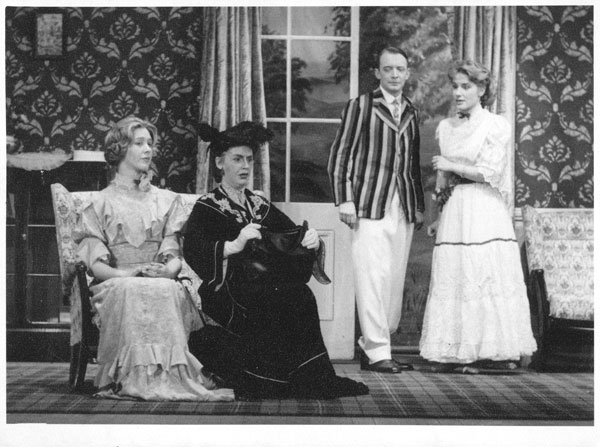
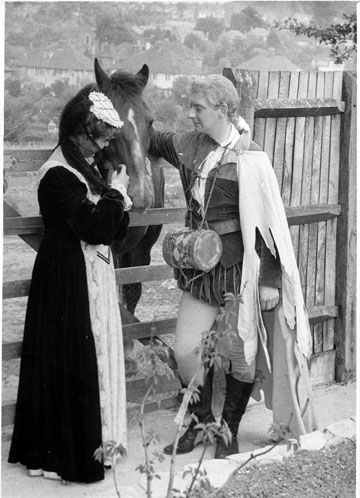
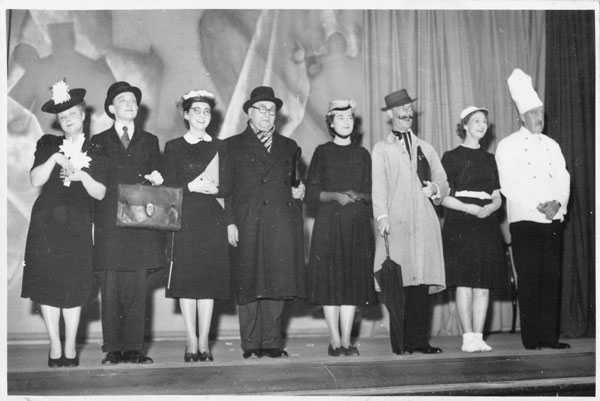
I recently found a batch of photographs from the 1950s, all of which feature theatrical performances. There's very little information on the backs, but I'm almost certain that they show the work of an amateur dramatics group rather than a professional one. The clues are as follows:
  • The photos were processed in the dreary London suburbs of Cheam and New Malden
  • There's quite a lot of over overacting
  • The pictures look like the work of an enthusiastic amateur; many were very blurry
But I may be wrong. You decide:
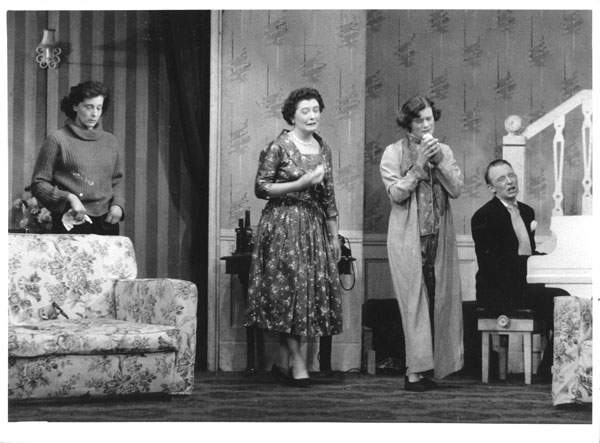
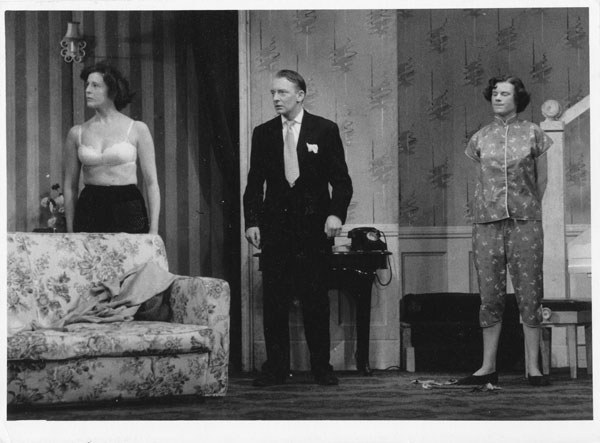
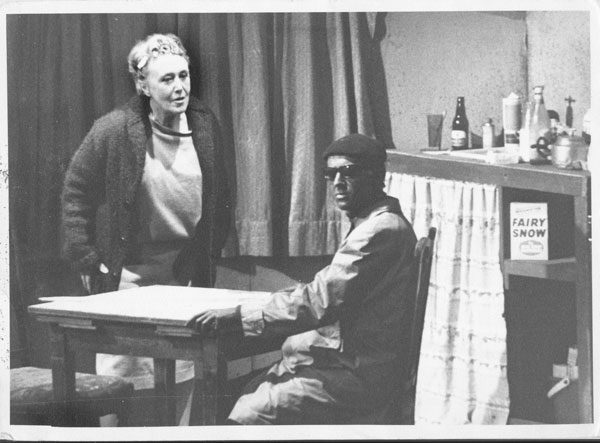
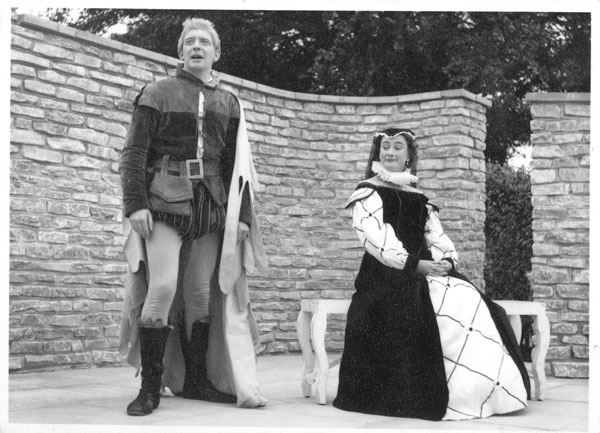
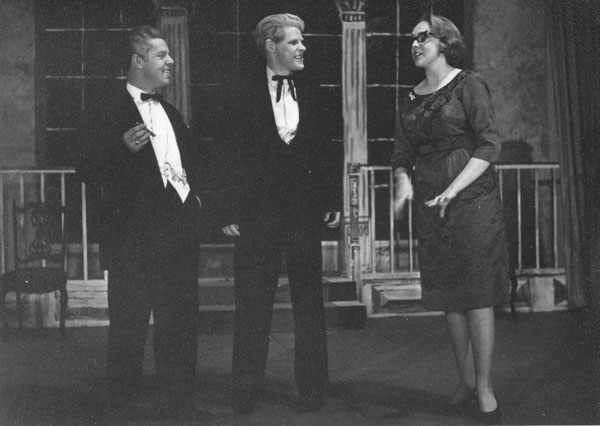
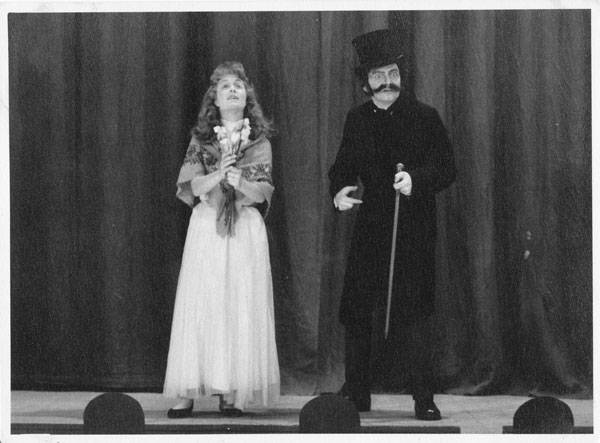
 img_0006 This photo was printed by Cole Studios (which is still going) in New Malden - a rather drab place between Kingston-upon-Thames and Raynes Park. It now has a large Korean community, for no discernible reason (unless it reminds them of North Korea). The set looks quite spartan, but that isn't the case in the next picture: img_0008This is clearly a very emotional point in the play and everyone seems to be weeping. Perhaps this is in response to an earlier scene, in which things get rather heated: img_0007 This is a little bit racy for 1950s am-dram. I don't know what play it is, but it clearly isn't 'Charlie's Aunt'. I think it was very brave of Miss Perkins in Accounts to agree to strip down to her underwear, but perhaps it was even more courageous of Brenda to wear those awful pyjamas.
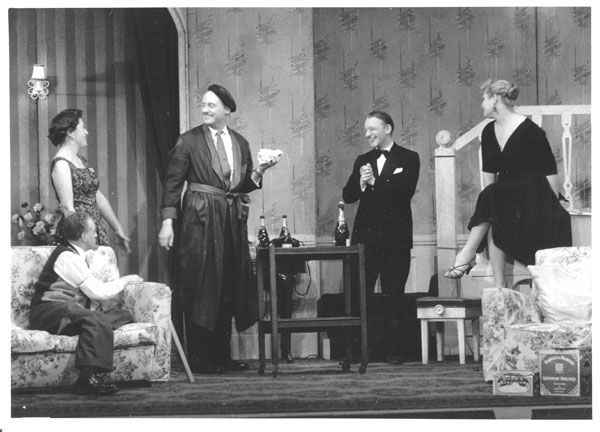
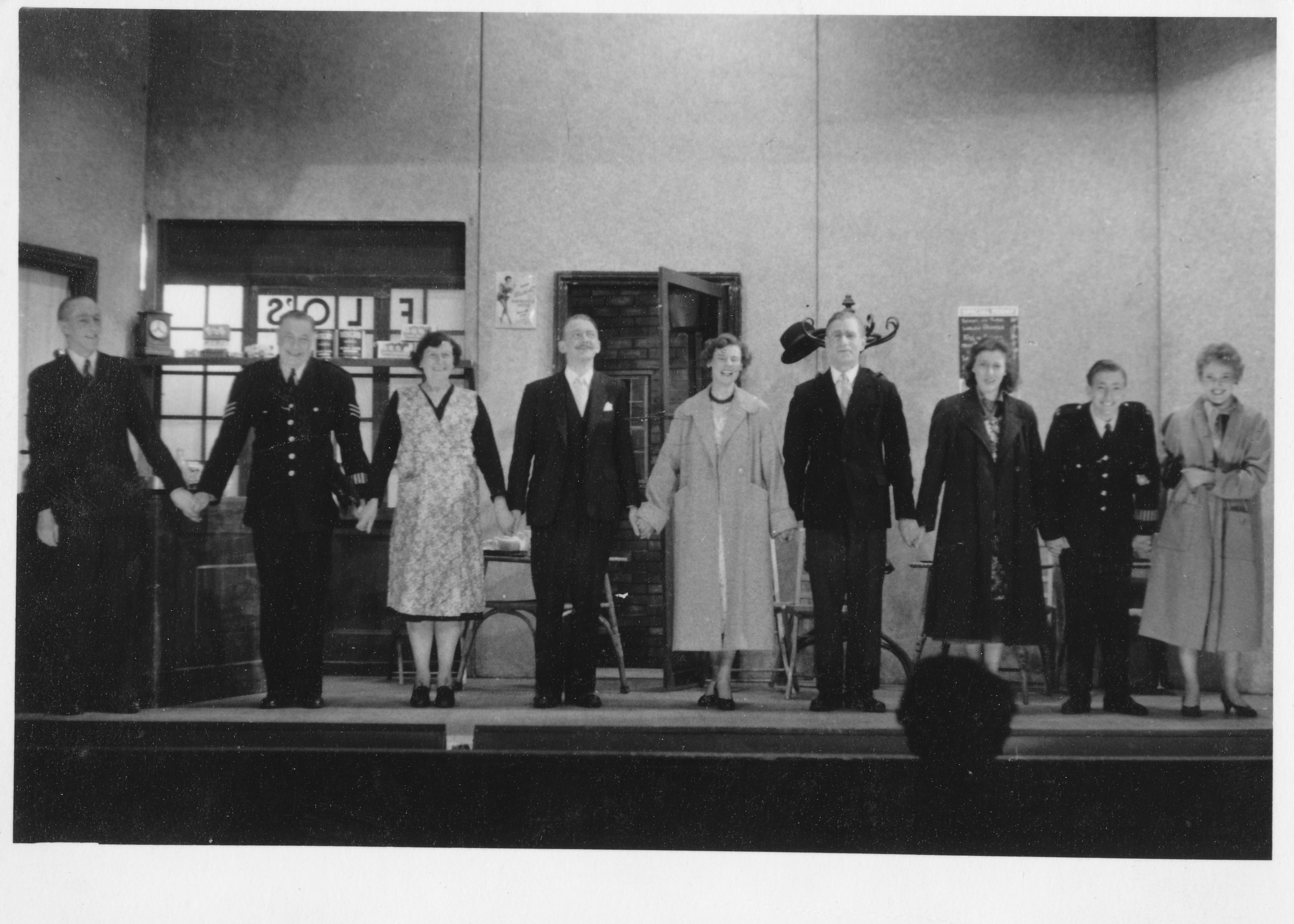
 img_0005 In the end, everything is resolved amicably. It turns out that Miss Perkins was simply modelling for an artist and the murder weapon was a telephone directory for New Malden and Cheam. Brenda is the murdereress and she switched to the terrible pyjamas because her dress had blood on it. It is commendable that this company were prepared to tackle gritty dramas rather than just stick to the old favourites: img_0004 Here we see a 'kitchen sink' drama, as evidenced by a kitchen sink and a packet of Fairy Snow. I presume that this is a challenging drama about race, as one of the cast appears to have 'blacked-up'. I also see that the woman is wearing hair rollers to indicate that she is working class. img_0003 This is from 'Twelfth Night'. Today we would probably say that this was part of an 'outreach programme' that sought to 'create links with the local community' or even 'communities'. In the 1950s, they just did an open air performance and hoped that it didn't rain. img_0009 This is from a production of 'Call Me Madam'. I find the rictus grin of the man in the middle slightly offputting. img_0010 I have no idea what this play is, but I don't think it's 'The Importance of Being Earnest'. However, this is: img_0011 In this production, the weeping middle-aged man at the piano has been transformed into a sprightly young buck. I wonder if a stripey blazer would do the same for me? I'm struck by how much hard work must have gone into the stage set and the costumes. I never used to notice these things until I met my wife's family, who worked in the theatrical world. Her father was the lighting designer for the London Coliseum, but although he was highly regarded by his peers, his work was rarely mentioned in reviews. Since then, I've always taken more interest in the details. img_0012 Once again, I have no idea what this is. I can only tell you that it isn't 'Look Back in Anger'. And now, the show is over and it's time to take a curtain call: img_0002
Friday, October 14, 2016

Thank you

Thank you to everyone who posted such kind comments in response to my last post. I would have liked to respond to each individual comment, but I'm not firing on all cylinders at the moment.

The cremation took place this morning and went as well as I could have hoped. Everybody seemed to think that my mother would have been pleased with it. We read one of her poems, I read a tribute and during the time of quiet reflection, we listened to Abide With Me. There was also a second poem by a Mr Anon, which was so apposite I wondered if anyone would guess the author's identity.

At the end, I handed out roses to each person and they placed them by the coffin. Afterwards, someone came up to me and asked me where I'd managed to find such beautiful flowers. I didn't tell them that I'd spent £6 in Tesco the previous day.

The next post I write will be to give the name and web address of my new blog.

I will finish with a picture of my mother behind the till at Woolworths in Teddington, for Chris, who wondered if he'd seen her there. She worked there every weekday morning until 1990. My father thought that she should do something better, but the hours fittted around the school holidays and she wasn't too proud to work there.


Next week, I will begin the long, slow process of dismantling a life, forensically going through every item in her flat: the reading glasses, tablets, walking stick, Werther's Originals, romance novels, Damart catalogues, old birthday cards from her family, certificates, framed cross stitch pictures, biscuits and unopened sets of notelets. 

It will feel wrong, as if she is going to come back and ask me what I have done.

Wednesday, October 05, 2016

Never Say Never


I had thought that The Last Post was the last post; on this blog at least. I'd set up a new blog on Wordpress and planned to make it more 'multimedia', beginning with a podcast featuring my mother and her friends talking about the day war broke out.

I wanted to record their stories before it was too late.

Sadly, it already was too late. My mother had a major heart attack ten days ago, but didn't realise what had happened and simply thought that she was unwell. By the time she was admitted to hospital, four days later, the damage to her heart was irreversible.

She didn't know that she was dying. During my last visit, only ten hours before her death, my mother asked me to bring a comb with me when I returned, as she was concerned that her perm was in a mess. I made a note to buy one the next day.

The hospital phoned several times during the night, but I was sound asleep and heard nothing. When I finally answered, a doctor told me to get there as soon as I could. I raced across the South Downs in the dark, jumping the traffic lights when there were no other cars. I arrived just in time.

My mother was asleep, with an oxygen mask over her face. The doctor didn't beat around the bush: "I'm afraid your mother is dying. I don't think it will be long. We've done everything we can to make her comfortable." The nurse stroked my arm and the doctor asked if we had any religious requirements. I shook my head.

The oxygen mask steamed up every time my mother exhaled. I noticed that her left eyelid was half open, but I had been assured that she wasn't conscious. I wondered how things could have changed so much over a few hours.

I took my phone out and sent a text to my wife to let her know what was happening. After pressing send, I looked up and noticed that the oxygen mask was clear. The nurse took my mother's wrist: "She's gone." A heart that had been beating continuously since 1929 had stopped.

It was a shock, but also a relief. My mother had died a peaceful, dignified death, blissfully unaware of what was happening to her. If she'd lived, she would have had a pretty awful existence, needing help with even the most basic tasks. She had always dreaded ending up in a home or 'going potty' and selfishly, I dreaded it too. 

In spite of decreasing mobility, my mother had led a pretty active life right up until the end. She spent her last two weeks hobbling around the streets of Lewes, determined to get one of the new plastic five pound notes. I don't know why she was so excited by them, but it became something of an obsession.  Sadly, she didn't find one.

I felt that I had to write this post, as I have written about my mother so many times and didn't want to leave out the end of the story.

I have just started to receive cards through the post. Whenever I see the phrase "passed on", I silently cringe, partly because my mother hated it so much: "They haven't passed on; they've died," she would always say. I'm not sure why it made her so angry, but perhaps growing up surrounded by death, during the London Blitz, gave her a contempt for the coyness of the modern age.

People are being very nice to me, saying how shocked I must feel, but my overwhelming emotion is one of gratitude that my mother lived as long and as well as she did. I've witnessed some pretty horrible deaths over the years and it was a huge relief to see my mother die peacefully.

At some point, I hope I'll be able to write something about my mother's life, but for the moment this is as much as I can do.

I will post a link to the new blog when it's ready.

Thursday, August 11, 2016

The Last Post

This blog is ten years old today and I have decided that this will be my last post, as I feel that the content has become increasingly repetitive. It was relatively easy to write when I had a job that exposed me to a wealth of amusing books, photos and diaries, but my present role as a 'carer' doesn't provide the same inspiration and posts take twice as long to write.

Some people have suggested that I write about my current experiences, but I feel that this would intrude on my sons' privacy. My older son has very strong opinions on the subject and every time I mention him in a blog post, I experience a slight pang of betrayal. It would be better to just stop.

I also feel that I need to focus on what I am going to do when, in a year's time, I'm able to return to work. I have almost a third of my working life ahead of me and have absolutely no idea what to do with it. I could revive my book business, but with so many suppliers going out of business, getting stock has become a real struggle.

I’m planning to take a break for a while, after which I will either set up a new blog or try and build a website. If that happens, I'll post a link here. Unlike a well-known book blogger, I will not be initiating the auto-destruct sequence and the content here will simply gather dust in the attic of cyberspace and the archives of the British Library.

The blog began as a simple experiment, while I was laid up in bed after eating some bad oysters. I wrote a rather fatuous post and pressed publish, not expecting anyone to read it. However, within a day I received an interesting comment from someone called Ms Baroque and realised that a blog post wasn't a monologue, but the beginning of a conversation.

I would like to thank everyone who has taken the time to read these posts over the years. I still can't quite understand why anyone would want to follow this blog, but I'm deeply grateful to those who do.

I would also like to thank those who have commented for their kindness, thoughtfulness and wisdom. Thanks to fellow bloggers, I have discovered some wonderful books, learned about subjects I knew nothing about and visited exhibitions that I might otherwise have missed.

In addition to communicating across the ether, I have also met a few bloggers, all of whom were as interesting and likeable as their writing.

I would like to apologise to anyone who has been offended by what I have written in some of my posts. There has never been any intent to cause upset, but my attempts to amuse may have occasionally hit a wrong note, either through naivety or thoughtlessness on my part.

I will continue to post on Twitter and Instagram (as phil._.b), so I hope to maintain contact with some of the people who have been good enough to follow this blog.

Once again, many thanks for reading.

Wednesday, July 27, 2016

To the North


By modern day standards I'm not particularly well travelled, but I have seen a little of the world and visited some unusual places. However, I've been pretty useless at exploring my own country. I wasn't fully aware of this until a couple of months ago, when I worked out that I had spent less than two weeks of my adult life on the northern side of the Watford Gap.

It came as a shock to realise that I'd spent more time in Chile, Spain or France than the upper two thirds of Great Britain, so I resolved to do something about it.

I'd wanted to explore the north for quite a few years, but my older son couldn't cope with any car journey over three hours and after a disastrous trip to Spain, we decided to give up on family holidays. 

However, my son has made so much progress during the last year, we felt that it was worth trying again, so I got out a map and worked out how far we could travel over ten days.

I checked distances on Google Maps and came up with the following intinerary: Lewes-Knaresborough-Whitby-Alnwick-Lindisfarne-Edinburgh-Inverness-Fort William-Glasgow-Lake Windemere-Yorkshire Dales-Haworth-Lewes. It would be a whistlestop tour of northern England and Scotland.

After confirming that our trip would include visits to Scottish relatives and a detour to the Lake District, my wife gave her royal ascent and I booked family rooms in a succession of hotels and b&bs. Then, two weeks ago, we got in the car and looked for a road sign that pointed to 'The North'.

For many years, I assumed that the North began somewhere slightly beyond Northampton, where people began to rhyme 'luck' with 'push' and many placenames ended in 'by' or 'thwaite'. There would be drystone walls instead of hedgerows and wild, windswept moorlands. But I was wrong. Before the North there is a place called the Midlands and everything looks quite similar for a long time.

I also noticed that even when I reached Yorkshire, it didn't look particularly northern until I'd driven right up to the edge of the North Yorkshire Moors, at which point the landscape dramtically changed and became more interesting.

But rather than bore you with a blow by blow account, here is a brief summary of the highs and lows of the trip:

HIGHS
  • The landscape of the Scottish Highlands.
  • The accents, all of which were music to my ears compared to our local one.
  • Knaresborough - one of the most beautiful towns I've visited, anywhere.
  • North Yorkshire, which fulfilled my dreams of wild and windy moors.
  • Whitby - a beautiful fishing town with the best fish and chips in Britain.
  • The B&Bs we stayed at - a far cry from their grim predecessors.
  • The museums and galleries of Edinburgh - all within walking distance, unlike London.
  • Visiting my wife's Scottish relatives.
LOWS
  • The awful chain hotels we stayed at - soulless and expensive, with suprisingly bad food.
  • Glasgow - I enoyed exploring the city, but my sons hated it and refused to leave the hotel.
  • 11 days of UHT milk pods - you can't make a decent cup of tea with it.
  • The eternal struggle of finding somewhere to park.
  • Holy Island - It had always looked impressive from a distance. Up close, it has bungalows.
  • The cost of even the most basic evening meal.
  • The drive home, which went on and on and on.
Here are some photos:

Knaresborough was beautiful and civilised. I would like to go back for longer and also explore nearby Harrowgate.

I was also a big fan of Whitby, which is a very picturesque fishing port, but also a traditional working class holiday resort, which saves it from being too twee. I particularly liked the famed Yorkshire 'plain speaking' as displayed by a rather taciturn waiter who simply looked at our plates and said "All done?"

My wife took a while to adjust: "They don't seem to have a wine list. Is that a northern thing?"

I'd wanted to visited Whitby ever since I'd watched a BBC Play for Today called The Fishing Party.


The ruined Whitby Abbey is the town's main attraction and the connection with Dracula draws many people with dyed black hair and unfortunate tattoos. I also noticed a lot of older men with shaved heads and large, slightly menacing dogs.

I don't normally long for bad weather, but I felt that the Abbey had lost some of its mystery in the bright sunshine, so in the evening I climbed the famous 199 steps and took some more atmopsheric shots, like this one:


This is the Falling Foss - one of the many beautiful rivers and falls in North Yorkshire. My sons loved clambering over the rocks.

Edinburgh was a big hit with everyone. We booked an apartment just off the Royal Mile, which I can warmly recommend if you like non-stop bagpipe playing. Sometimes two pipers were playing different pieces at the same time, like a Charles Ives composition.

An octogenrian relative offered to drive us around the city and out of politeness we assented, but it turned out to be one of the most terrifying experiences I've ever had, like a very slow but deadly James Bond car chase.

This photo above is of a very attractive Edinburgh cafe that serves haggis sausages.

What better way to start a visit to the Highlands than a cruise on Loch Ness? Sadly, we were acommpanied by several dozen Chinese tourists, all armed with selfie sticks, who seemed rather over-excited and kept shouting over the commentary on the boat. At first I thought it was a one-off, but we witnessed the same behaviour on several occasions and our b&b owner confirmed that this was a common phenomenon.

I remember a time when, along with the Japanese and the Scandinavians, the Chinese were the most well-behaved and self-effacing of travellers. What has happened?

I'd always assumed that Inverness was a small, charming Highland town and part of it still is, but it is also now one of Europe's fastest-growing cities, with Sim City-like industrial zones and suburbs. It also has a very large secondhand bookshop called Leakey's, which is well worth a visit.

After what my wife's great-uncle described as a 'dreich' day, we were rewarded with some glorious weather when we drove to the west coast. I noticed that nearly half of the cars on the road were from the Netherlands. I've no idea why, but perhaps they were seeking relief from the relentless flatness of their own country.

Plockton is one of the most beautiful places on the west coast - a small fishing village that, due to some geographical quirk, faces east. Its location in a protected bay and the Gulf Stream give it a surprisingly mild climate. Palm trees can be found by the harbour.

I had been to Plockton once before and met an interesting woman who was a very keen member of the SNP. She very kindly drove me around the Isle of Skye and gave me a map showing a route that took me on a path up into hills above Plockton. When I reached the top, the view was breathtaking. I vowed I would return as soon as I could.

That was 13 years ago.

Glencoe - a stunning place with a tragic history. I intended to go for a long walk, but when my sons found a stream and started building a dam, I didn't have the heart to stop them:

Parents can spend so much money on keeping their children entertained, but the greatest pleasures in life usually cost nothing (fuel, food and accommodation excepted). If we go back, I think I'll look for somewhere where my sons can just mess around in the water, preferably without drowning,

Later we stopped by a loch and my sons ruined two pairs of shoes, but had one of the happiest afternoons of their lives.

After the grandeur of the Scottish Highlands, Glasgow was an huge disappointment, as far as my sons were concerned. I thought it was it little like London - not beautiful, but full of interesting buildings and hidden gems, so I took a train to Partick and began exploring. I'd like to see more of Glasgow, but I suspect it will be a solo trip.

Glasgow's reputation as a tough city is neatly encapsulated in the 'No Spitting' signs in their old subway carriages, which can be seen in the excellent Riverside Museum. The sign wasn't simply an attempt to improve the manners of Glasgow's more uncouth inhabitants, but also a vital measure in the fight against TB, which claimed blighted the lives of many Glaswegians.

Although TB no longer ravages the tenements of Glasgow, the city still has many public health problems and I noticed many people who were not only morbidly obese, but also keen smokers. Glasgow is officially the sickest city in the United Kingdom and one in four men don't reach their 65th birthday.

After Glasgow, we drove down to the Lake District and hired a boat on Lake Windemere. Like Loch Ness, it was full of Chinese tourists with selfie sticks, but I managed to find a self-drive boat and we escaped from the madding crowd. Apart from a near collision with a paddle steamer, we had a very pleasant time.

On the final day, we visited the Bronte Museum in Haworth, which was well worth the additional two hours journey time. On the dining table, where the sisters wrote their novels, there is a small E carved by Emily, who died on the couch in the background. The other rooms are full of interest, containing childhood ephemera, Bramwell's paintings and Charlotte's wedding dress.

I was particularly struck by a display of locks of hair - Emily was very blonde - and wondered if it would be possible to recreate the Bronte family using Jurassic Park-style technology.

I said I wouldn't bore you with a blow by blow account, but I seem to have done exactly that. To conclude, the holiday was a success and my older son, who once refused to leave the house, seems energised by the experience. Like so many children with his issues, he loved the most remote parts of the Highlands and hated anywhere that was full of tourists.

As for me, in the same way that some middle aged men realise that they're gay after years of denial, I have discovered that I am a closet Northerner. I suppose all the signs were there - a fondness for mushy peas, an aversion to direct sunlight and a preference for plain speaking.

Perhaps I've been living in the wrong part of England all this time.